Build Your First AI App
Understanding AI Fundamentals
What Is AI?
Artificial intelligence is about teaching machines to think, reason, and learn like humans. It's a broad field in computer science that aims to create systems capable of performing tasks that typically require human intelligence. This includes everything from recognizing faces in photos to understanding spoken language and driving a car.
The idea isn't new. Thinkers have dreamed of creating intelligent machines for centuries. But the modern field of AI really took off in the mid-20th century with the invention of computers. Since then, it's been a story of steady progress, with periods of rapid advancement fueled by more powerful computers and larger amounts of data.

Two Kinds of AI
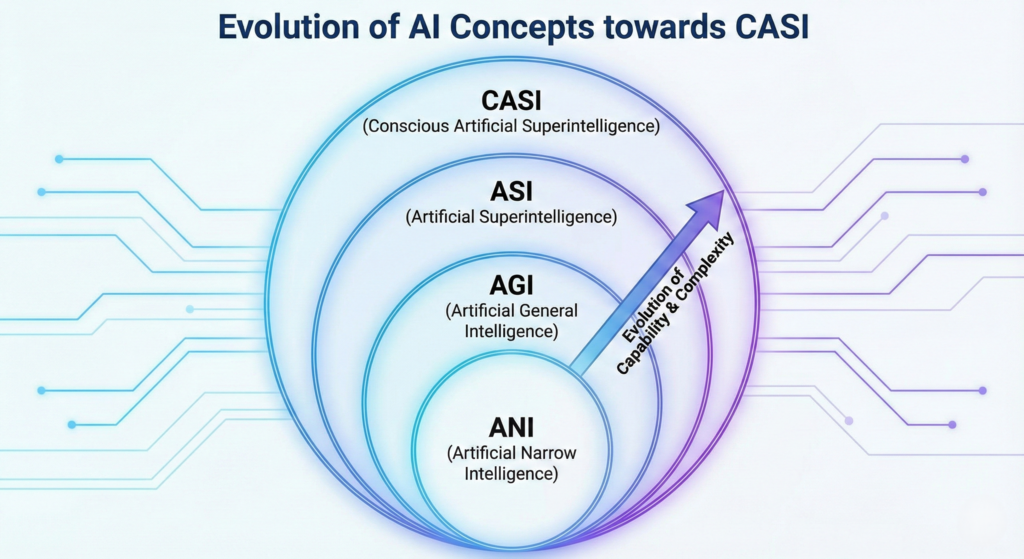
When people talk about AI, they're usually referring to one of two types: Narrow AI or General AI. Understanding the difference is key to cutting through the hype.
Nearly all the AI we use today is Artificial Narrow Intelligence (ANI). This type of AI is designed to perform a single, specific task very well. A chess-playing computer, a spam filter for your email, or a voice assistant like Siri are all examples of narrow AI. They're incredibly powerful within their limited context but can't operate outside of it. A chess AI can't write an email, and a spam filter can't play chess.
Narrow AI is a specialist. It's a master of one trade, not a jack-of-all-trades.
The other type is Artificial General Intelligence (AGI). This is the more sci-fi version of AI: a machine with the ability to understand, learn, and apply its intelligence to solve any problem, just like a human being. AGI doesn't exist yet. It's the long-term goal for many researchers, but creating a machine with the flexible, creative, and common-sense reasoning of a person is an enormous challenge.
Learning From Data
So, how do we teach machines to be intelligent? One of the most important approaches is machine learning, a subfield of AI. Instead of programming a machine with explicit rules for every possible situation, machine learning allows a system to learn directly from data.
You feed an algorithm thousands of examples, and it learns to recognize patterns. For instance, to build a cat detector, you'd show a machine learning model millions of pictures, some with cats and some without. Over time, the model learns the features that define a cat—whiskers, pointy ears, fur—and can then identify cats in new images it has never seen before.
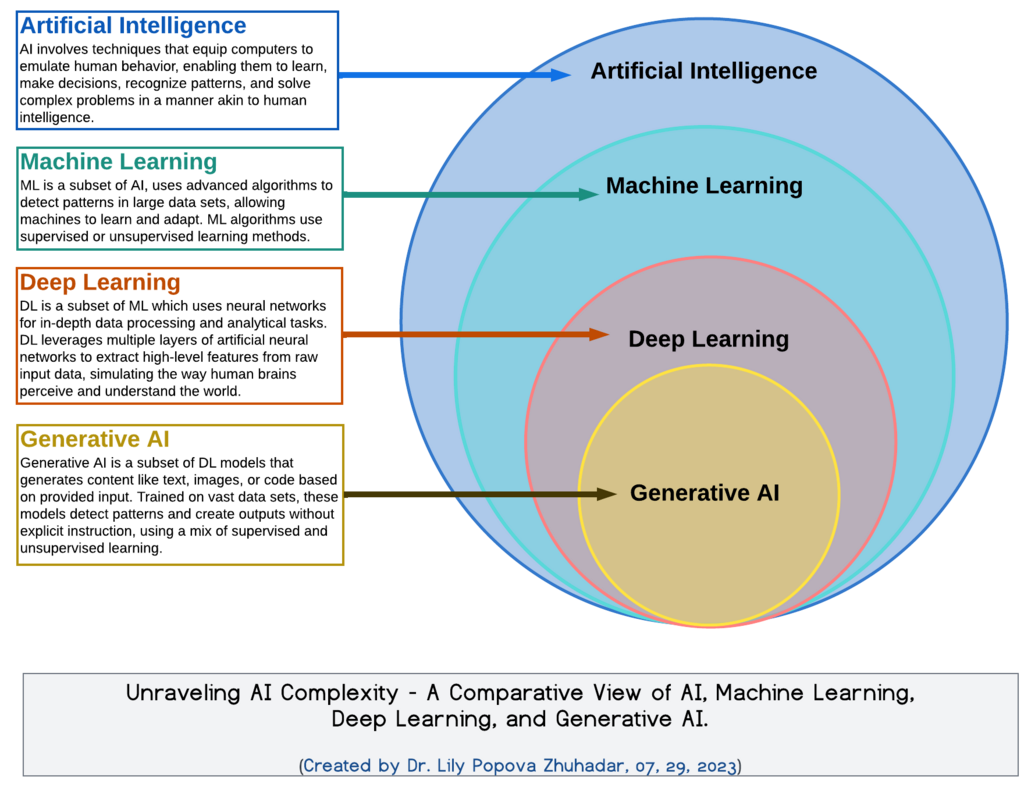
A powerful type of machine learning is deep learning. It uses structures called neural networks, which are inspired by the human brain. These networks have many layers, allowing them to learn complex patterns in large amounts of data. Deep learning is the technology behind many of today's most impressive AI achievements, like self-driving cars and advanced medical diagnostics.
Another key area is Natural Language Processing (NLP). This is all about giving computers the ability to understand and generate human language. When you ask a smart speaker a question, use a translation app, or see a chatbot pop up on a website, you're interacting with NLP. It's the bridge between human communication and computer understanding.
AI is a broad field that encompasses machine learning, deep learning, natural language processing, computer vision, and more.
Now that you have a handle on these core concepts, let's test your knowledge.
What is the primary difference between Artificial Narrow Intelligence (ANI) and Artificial General Intelligence (AGI)?
The technology that enables computers to understand and generate human language, used in chatbots and translation apps, is called ____.