Bitcoin Basics
Introduction to Bitcoin
A New Kind of Money
Bitcoin is the first decentralized digital currency. Think of it as internet-native money. Its main purpose is to let people send payments directly to each other online, without needing a bank or payment processor in the middle.
This idea was introduced in 2008 in a paper titled "Bitcoin: A Peer-to-Peer Electronic Cash System." The author used the pseudonym Satoshi Nakamoto. To this day, no one knows the true identity of Satoshi Nakamoto, whether it was one person or a group of people.
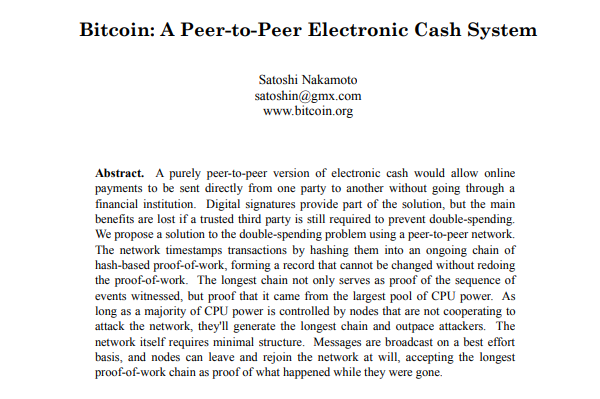
Nakamoto’s paper proposed a solution to a long-standing problem in computer science: how to create a digital payment system where transactions can't be duplicated or reversed without a central authority to verify everything. The goal was to create a system built on cryptographic proof instead of trust in a third party.
With Bitcoin, you are your own bank. You have full control over your money without needing permission from anyone to use it.
Decentralization Explained
Traditional money, like the U.S. dollar or the Euro, is centralized. Governments can print more of it, and banks control its movement. They can freeze accounts, block transactions, and set the rules.
Bitcoin is different. It's decentralized. This means no single entity controls it. The network is maintained by a global community of volunteers and users. All the rules were set at the beginning and can't be changed without overwhelming consensus from the network's participants.
This structure makes Bitcoin resistant to censorship and control. Since there's no central point of failure, it's incredibly difficult for any government or organization to shut it down.
Digital Scarcity
One of Bitcoin's most important features is its fixed supply. Unlike government-issued currencies that can be printed at will, which can lead to inflation, there will only ever be 21 million bitcoins created. This limit is hard-coded into the Bitcoin protocol.
The supply of new bitcoins is predictable and diminishes over time, making it a scarce digital asset.
This programmed scarcity is why some people refer to Bitcoin as "digital gold." Like gold, it is rare and cannot be easily created. Because of this property, many people use Bitcoin not just for payments, but as a store of value. They see it as a way to protect their savings from the devaluation of traditional currencies over the long term.
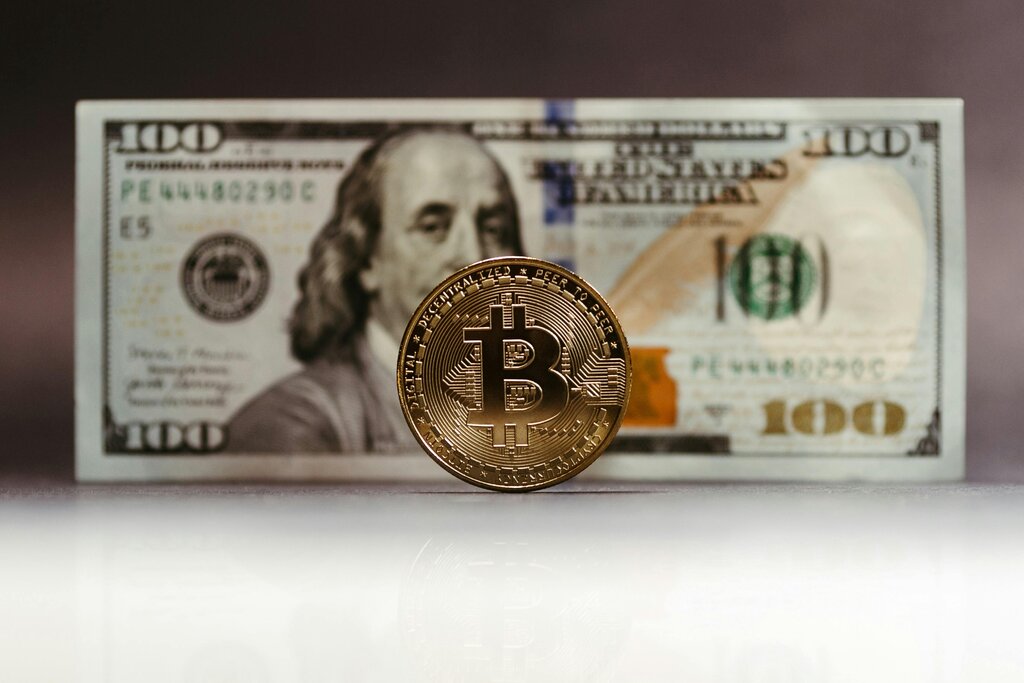
In short, Bitcoin introduced the world to the idea of a digital asset that is decentralized, borderless, and has a provably finite supply. It operates on a global network, accessible to anyone with an internet connection, and represents a fundamental shift in how we think about money.
Who is the creator of Bitcoin, as named in the 2008 white paper?
What is the primary problem Bitcoin was designed to solve in digital transactions?