Biomechanics and Functional Anatomy of Human Gait
Gait Cycle Dynamics
The Rhythm of Walking
Walking feels automatic, but it's a precisely coordinated dance of timing and space. To analyse it, biomechanists look at temporal-spatial parameters. These are the vital signs of our gait. They include velocity (how fast you walk), cadence (steps per minute), step length (distance between heel strikes of opposite feet), and step width (the sideways distance between your feet).
These metrics tell a story. A change in walking speed, for instance, can affect every other parameter. Understanding these relationships is the first step in decoding the complex mechanics of human locomotion.
A Closer Look at the Stance Phase
The gait cycle is one complete stride, from the heel of one foot hitting the ground to that same heel hitting the ground again. For clarity, this cycle is broken down into distinct phases. The most widely used system for this is the [{
Roughly 60% of the gait cycle is spent in the stance phase, where the foot is in contact with the ground. The other 40% is the swing phase. We'll focus on the critical events within the stance phase, where the body accepts weight, maintains balance, and prepares to propel itself forward.
The first critical event is the Loading Response. This phase begins the moment the foot touches the ground and ends when the other foot lifts off. Its two main jobs are shock absorption and accepting the body's weight while maintaining stability. It's a moment of controlled impact.
Next comes Mid-Stance, where the body's weight is aligned directly over the supporting foot. This is a period of single-limb stability. The final key phase is Terminal Stance, which starts as the heel lifts off the ground and ends just before the other foot makes initial contact. Here, the body accelerates forward, preparing for the propulsive push-off that will initiate the swing phase.
The Three Rockers
To move through the stance phase smoothly and efficiently, the body uses three 'rockers'. These aren't separate body parts but biomechanical concepts describing how the foot and ankle complex acts as a pivot to keep momentum moving forward. They are crucial for a fluid, energy-efficient gait.
The heel rocker begins at initial contact. The rounded heel bone (calcaneus) acts as a pivot, allowing the body to roll forward smoothly onto the foot. This mechanism helps absorb shock and translates vertical forces into forward momentum.
As the body moves over the leg, the ankle rocker takes over during mid-stance. The ankle joint becomes the fulcrum, controlling the rate at which the lower leg advances over the stationary foot. This controlled movement is essential for stability on a single leg.
Finally, the forefoot rocker occurs during terminal stance. As the heel rises, the heads of the metatarsals (the ball of the foot) serve as the pivot. This action accelerates the body's centre of mass and prepares the leg for the propulsive push-off into the swing phase.
Support and Stability
During the gait cycle, there are two periods of double limb support, where both feet are on the ground. These occur during the loading response of one leg and the pre-swing of the other. These periods are short but crucial for stability, as they provide a wide base of support for transferring weight from one leg to the other. As walking speed increases, the time spent in double limb support decreases, eventually disappearing entirely when we start to run.
In contrast, single limb support occurs twice per cycle, during each leg's mid-stance and terminal stance. This accounts for about 80% of the total cycle. It's during these phases that our balance is most challenged.
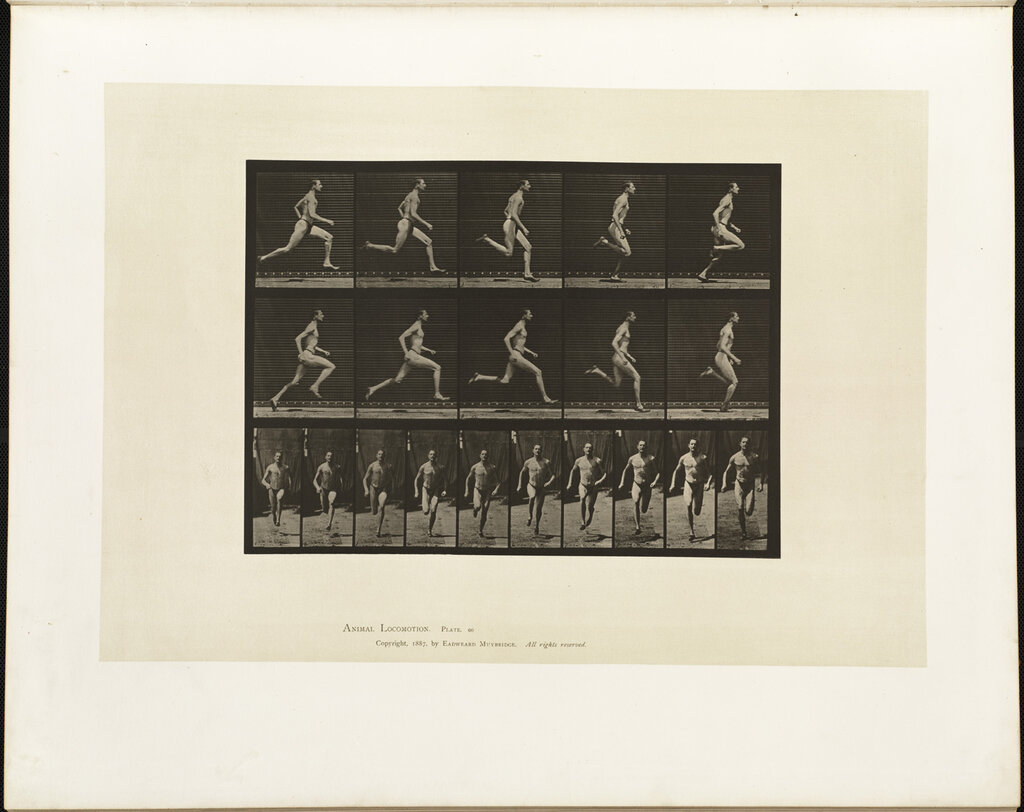
As we walk, our [{
The side-to-side motion shifts the CoM over the supporting foot during single limb support, keeping us balanced. The efficiency of our gait is largely determined by how well we minimise these oscillations, preventing wasted energy on unnecessary movements.
Let's check your understanding of these core concepts.
Which of the following is considered a primary temporal-spatial parameter of gait?
During which phase of the gait cycle is the body's centre of mass at its highest point?
Understanding these phases and mechanics provides a framework for analysing both normal and pathological gait, offering insights into how the body masterfully handles the simple act of walking.