Beginner's Guide to Drawing Festive Christmas Postcards
Basic Drawing Techniques
The Building Blocks of Art
Every complex drawing you've ever admired is made of simple shapes. A house is a square with a triangle on top. A car is a collection of rectangles and circles. Once you learn to see the world this way, drawing becomes much less intimidating.
Start with Simple ShapesBegin your sketches by breaking down your subject into basic shapes, such as circles, squares, and triangles.
Think about a classic snowman. It’s just three circles stacked on top of each other, getting smaller as they go up. A Christmas tree can start as one large triangle. Ornaments are circles, and the gifts underneath are squares and rectangles. By starting with these basic forms, you create a solid foundation for your drawing.
Practice looking at objects around you and breaking them down into their simplest forms. This is the first step to drawing anything you can see.
Getting Proportions Right
Once you have your basic shapes, the next step is proportion. Proportion is simply the size of objects in relation to one another. Getting it right makes your drawing look believable. An elf's hat shouldn't be bigger than the elf, and the angel on top of the tree shouldn't be heavier than the branches supporting it.
When sketching, lightly draw your shapes first. Step back and look at them. Does the snowman's head look too big for its body? Is the trunk of your Christmas tree too skinny? Make adjustments before you start adding details. This saves a lot of frustration later.
Creating the Illusion of Depth
Drawings are flat, but they don't have to look that way. Perspective is the technique artists use to create an illusion of depth on a flat surface. The simplest way to understand this is to remember one rule: objects that are farther away appear smaller.
Imagine a row of candy canes lining a path. The candy cane closest to you will be the largest. As they recede into the distance, they will get progressively smaller. Lines that are parallel in real life, like the sides of a road or a fence, will appear to converge at a single point on the horizon. This is called the vanishing point.
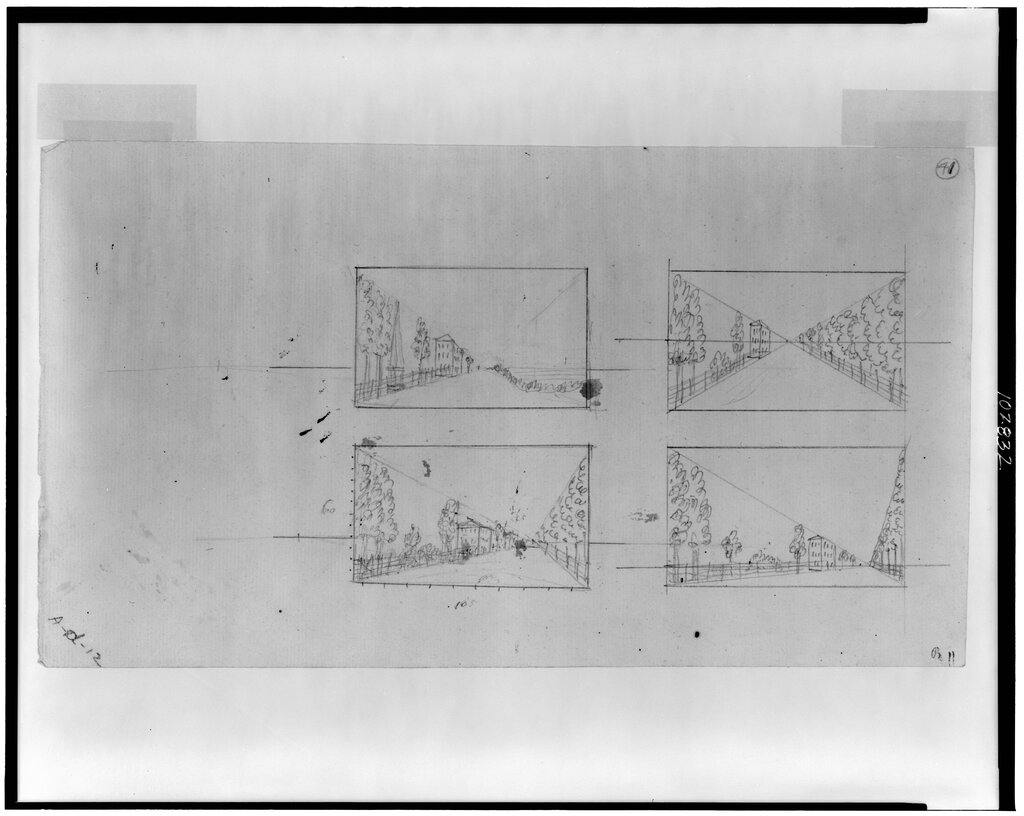
For your postcards, you don't need to be an expert in complex perspective. Just keeping that simple rule in mind—smaller means farther away—will instantly add depth to your scenes. If you draw a winter village, make the houses in the background smaller than the ones in the foreground.
Bringing Shapes to Life
Shading is what turns a flat circle into a round ornament and a simple triangle into a three-dimensional Christmas tree. It’s the process of adding value—the lightness or darkness of a color—to create the illusion of form, light, and shadow.
shading
noun
The technique of using light and dark tones in a drawing to create an illusion of depth, form, and texture.
Before you start shading, decide where your light source is. Is it the sun? A lamp? A glowing star on the tree? Objects will be lightest on the side facing the light and darkest on the side facing away. Here are two simple techniques to get you started.
Hatching: This involves drawing parallel lines to create shadow. The closer the lines are to each other, the darker the shadow will appear. It's a quick and clean way to add dimension.
Cross-Hatching: This is just like hatching, but with a second layer of lines drawn in the opposite direction. Cross-hatching creates darker, more textured shadows and is great for things like the bark of a tree or a cozy wool sweater.
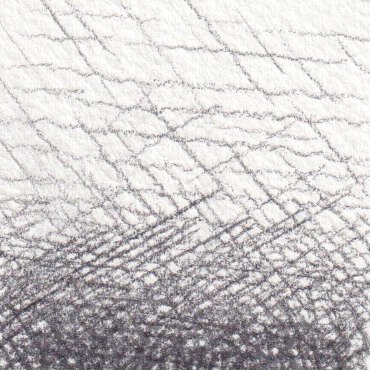
Start with light pressure on your pencil and gradually build up your shadows. It’s always easier to make an area darker than it is to make it lighter. With these foundational skills, you're ready to start designing your own unique Christmas scenes.
What is the foundational first step to drawing any complex object?
In the context of drawing, what is 'proportion'?