Beginner AI Fundamentals and Tools
Neural Architectures
From Neurons to Networks
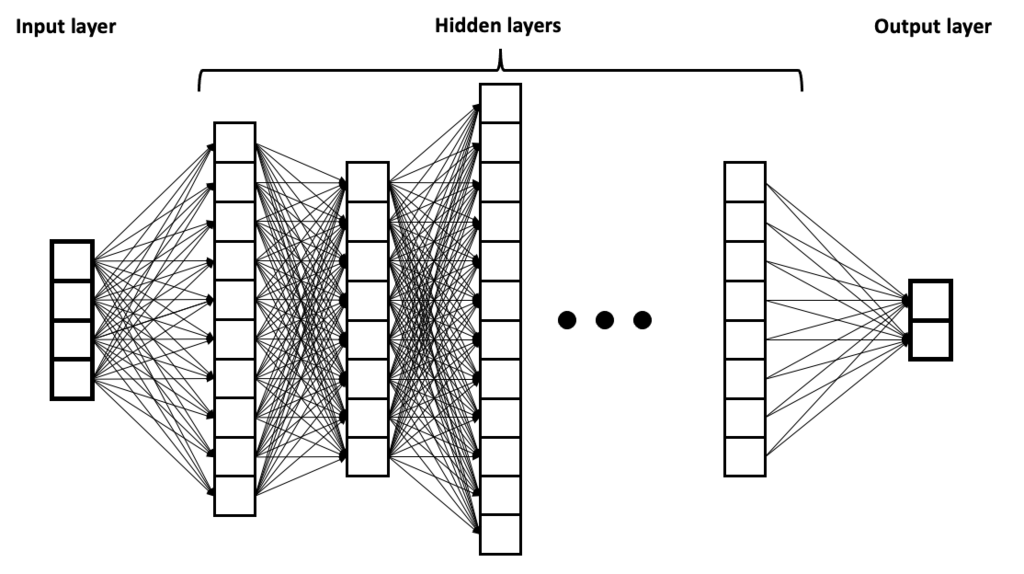
Artificial neurons, the basic processing units of a neural network, don't work in isolation. They are organized into layers, each with a specific job. Think of it like a digital assembly line. The process begins at the input layer, which receives the raw data—like the pixels of an image or the words in a sentence. This is the only layer that directly interacts with the outside world.

From there, the data flows through one or more hidden layers. These are the workhorses of the network. Each hidden layer takes the output from the previous layer, transforms it, and passes it along. It's in these layers that the network learns to identify increasingly complex patterns. A first hidden layer might detect simple edges from pixels, a second might combine those edges into shapes, and a third might recognize those shapes as a face.
The connections between neurons have associated weights, which are like adjustable knobs. During training, the network tunes these weights to strengthen or weaken connections, learning which patterns are important. An activation function then acts as a switch, deciding whether a neuron's output is significant enough to pass to the next layer.
Finally, the data reaches the output layer. This layer synthesizes the information processed by the hidden layers to produce the final result. For a network identifying images, the output layer might have one neuron for each possible category ('cat,' 'dog,' 'car'), with the neuron corresponding to the correct label firing most strongly.
Recognizing Patterns in Space
Not all data is the same, so we need specialized architectures. For spatial data like images, (CNNs) are the go-to tool. A CNN doesn't look at an image all at once. Instead, it scans the image with small filters, or kernels, that are trained to recognize specific low-level features like edges, corners, or colors.
This process is known as hierarchical feature extraction. Early layers in a CNN learn to spot basic patterns. As the information moves deeper into the network, subsequent layers combine these simple features into more complex ones. Edges become shapes, shapes become textures, and textures combine to form parts of an object, like an eye or a nose. By the final layers, the CNN has built a rich, abstract representation of the entire image.
Understanding Sequences
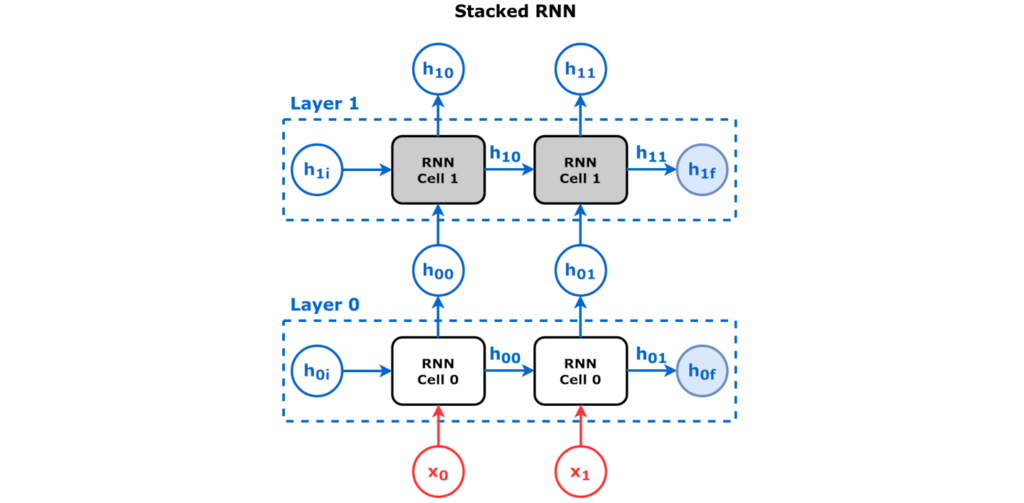
When data has a temporal or sequential nature, such as text, stock prices, or speech, the order of information is critical. A (RNN) is designed specifically for this. Unlike a standard feedforward network, an RNN has a 'memory' loop. As it processes an element in a sequence (like a word in a sentence), it takes the output it just generated and feeds it back into itself as an input for the next step.
This looping mechanism allows the network to maintain a 'state' or 'context' based on what it has seen before. When you read the sentence, "The clouds are gray, so I should bring an...", you can predict the last word is likely "umbrella." An RNN does something similar. Its memory of the words "clouds" and "gray" informs its prediction for the next word in the sequence. This ability to handle context makes RNNs powerful for tasks like machine translation, text generation, and speech recognition.
Different architectures like CNNs and RNNs are not mutually exclusive. In fact, many advanced AI systems combine them. For example, a system that generates captions for videos might use a CNN to analyze the visual features in each frame and an RNN to weave those features into a coherent descriptive sentence. Understanding these fundamental building blocks is the first step toward seeing how complex AI systems are designed.
Which layer of a neural network is the only one to directly receive raw data from the outside world?
A data scientist is building a model to predict the next word in a sentence. Which neural network architecture is most suitable for this task?