Basics of Constitutional Law
Welcome! I am excited to explore the foundations of how our legal and governmental systems are built. Before we jump into the structure of the U.S. Constitution, it would be wonderful to know what brings you to this topic today.
I'm just curious and want to understand how our government works
It is wonderful to have you here! Exploring how the government actually works under the hood is a fascinating journey, and there is no better place to start than the foundational blueprint of the entire system.

Can we make a diagram of this?
Visualizing how a constitution works is a fantastic way to see how all these moving parts fit together! Let's build a structural map of what we have discussed so far.

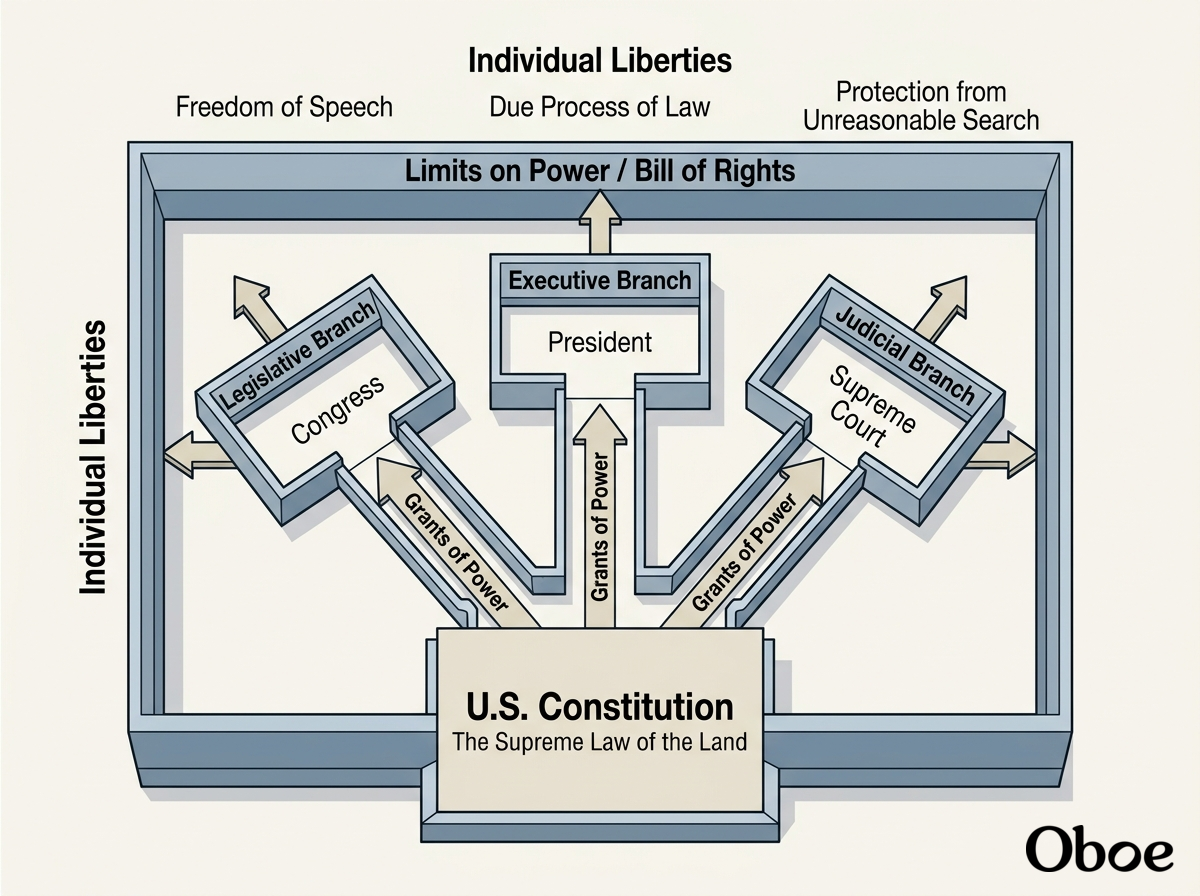
I've started generating a blueprint diagram that maps out how the Constitution simultaneously acts as a power generator for the government and an protective shield for you.
Now that we have the overall purpose down, we can zoom in on how this blueprint is actually organized. The physical document is split into two main sections: and .