AWS Troubleshooting Fundamentals
Introduction to AWS
What Is Cloud Computing?
Before cloud computing, if you wanted to launch a website or run a business application, you had to buy and manage your own physical servers. This meant finding space for them, paying for electricity, and hiring people to maintain them. It was expensive and slow.
Cloud computing changes all that. Instead of owning your own computing infrastructure, you can rent it from a cloud provider like Amazon Web Services (AWS). Think of it like electricity. You don't build your own power plant; you just plug into the grid and pay for what you use. The cloud is a global grid of data centres that you can access over the internet.
This model provides on-demand access to a shared pool of computing resources—servers, storage, databases, networking, and software—with minimal management effort.
This pay-as-you-go approach gives businesses incredible flexibility. They can scale up their resources during busy periods and scale down when things are quiet, only paying for what they actually use. This eliminates the need for large upfront investments in hardware and allows teams to move much faster.
Welcome to AWS
Amazon Web Services (AWS) is the world's most popular cloud platform. It started in 2006, offering just a few basic services. Today, it provides hundreds of services for nearly any task you can imagine, from running simple websites to powering complex machine learning models.
Amazon Web Services (AWS) is a comprehensive and widely used cloud computing platform, offering a vast array of services that cater to various computing needs.
These services fall into broad categories like compute, storage, databases, networking, and analytics. Instead of being one single product, AWS is a collection of building blocks that you can assemble in countless ways to build and run your applications.
The Global Reach of AWS
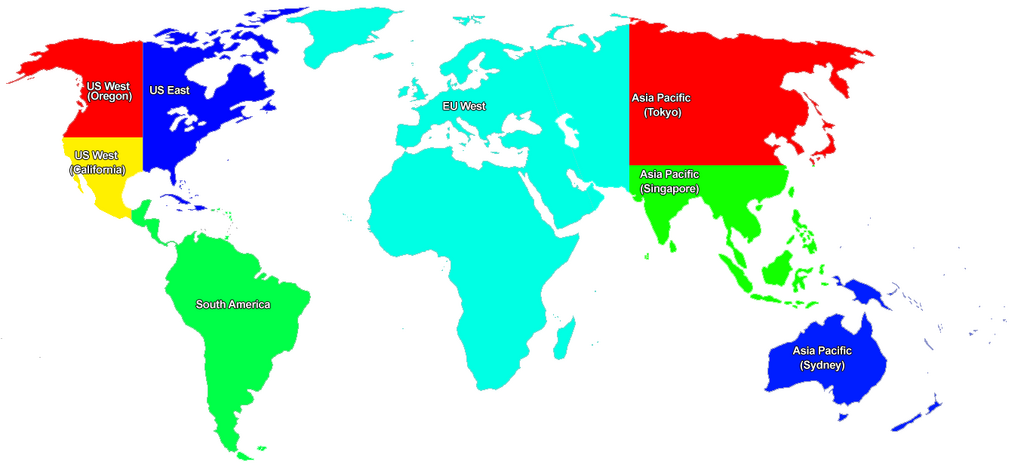
To deliver services reliably and quickly around the world, AWS has built a massive global infrastructure. This physical network of data centres is organised into two key concepts: Regions and Availability Zones.
Region
noun
A physical location in the world where AWS clusters data centres. Each region is geographically separate and independent from the others.
Regions allow you to place your resources and data in specific geographic areas. This is useful for reducing latency for your users and complying with data residency laws.
Within each Region, there are multiple, isolated locations known as Availability Zones.
Availability Zone
noun
One or more discrete data centres with redundant power, networking, and connectivity within an AWS Region. They are physically separate from each other.
Think of a Region as a major city, and Availability Zones (AZs) as separate neighbourhoods within that city. Each AZ is designed to be isolated from failures in other AZs. If one data centre has a power outage, the others in the same region keep running.
This structure is the key to building fault-tolerant and highly available applications. By distributing your application's resources across multiple AZs, you can ensure it stays online even if one entire data centre goes down. This is a fundamental concept for troubleshooting and designing resilient systems on AWS.
A Few Core Services
While AWS offers a huge portfolio of services, a few are considered the foundational pillars of the platform. Understanding these is the first step to working with AWS.
| Service Name | Ticker | Function |
|---|---|---|
| Elastic Compute Cloud | EC2 | Provides secure, resizable compute capacity (virtual servers) in the cloud. |
| Simple Storage Service | S3 | Offers scalable object storage for data backup, archiving, and analysis. |
| Virtual Private Cloud | VPC | Lets you provision a logically isolated section of the AWS Cloud for networking. |
| Identity and Access Management | IAM | Manages user access and permissions to AWS services and resources securely. |
For those new to AWS, starting with foundational services like Amazon S3, EC2, and IAM can help you understand the basics before moving into more specialized areas such as serverless computing, databases, and machine learning.
These services work together. You might use IAM to control who can launch an EC2 virtual server, which runs inside a VPC network and stores its data in S3. Grasping how these core pieces fit together is essential for building and troubleshooting any application on AWS.
What is the primary financial advantage of using cloud computing, like AWS, over traditional on-premises IT?
In the context of AWS global infrastructure, what is the relationship between a Region and an Availability Zone (AZ)?
Now that you've got the basics down, you understand the fundamental concepts of cloud computing and how AWS structures its global platform for reliability and scale.