Automatic Transmission Basics
Introduction to Automatic Transmissions
The Magic of Automatic Shifting
Most cars on the road today use an automatic transmission. Its main job is to change gears for you, letting the engine run efficiently whether you're crawling in traffic or cruising on the highway. Unlike a manual transmission, there's no clutch pedal to press and no gearstick to move. The car handles it all.
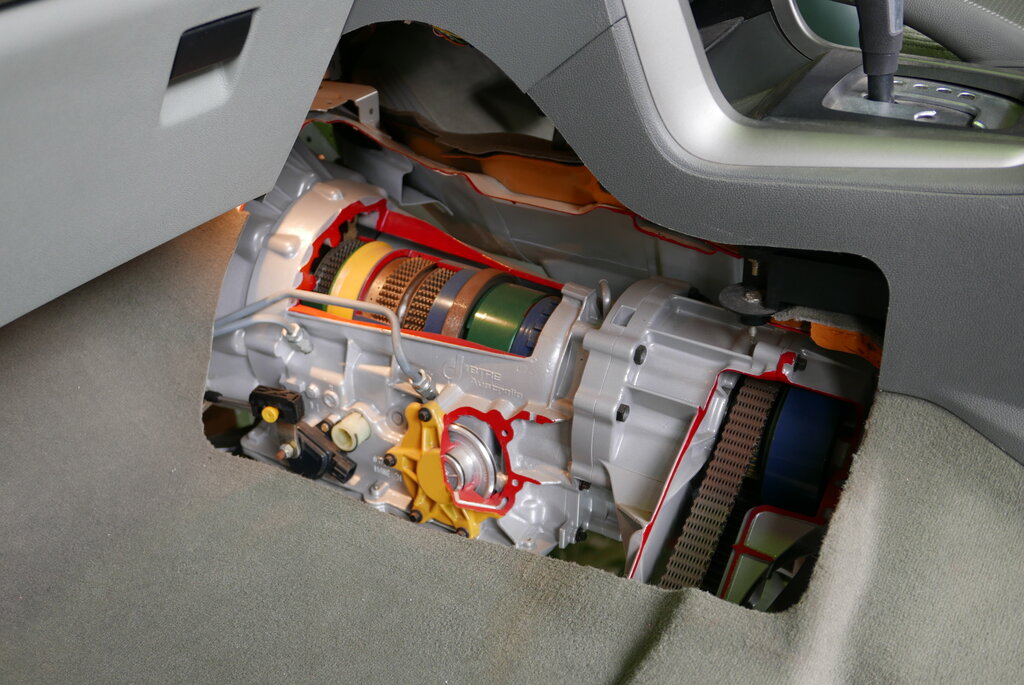
The core purpose of any transmission is to manage the relationship between the engine's speed (measured in revolutions per minute, or RPM) and the wheels' speed. Engines have a sweet spot where they produce the most power and use fuel most efficiently. The transmission ensures the engine stays in this range by switching between different gear ratios, essentially giving the car different levels of power and speed.
Why Go Automatic?
The most obvious advantage of an automatic transmission is convenience. Driving in stop-and-go city traffic is far less work without a clutch pedal. This ease of use makes driving more accessible and less stressful for many people.
Modern automatics also offer a remarkably smooth ride. The gear changes are often so seamless that you barely notice them. And in terms of performance, today's automatic transmissions can shift gears faster than any human can with a manual, which can lead to quicker acceleration.
An automatic transmission simplifies driving by selecting the optimal gear ratio without any input from the driver.
A Glimpse Inside
So how does a car shift gears on its own? It relies on a few key components working together. While the details are complex, the basic principles are straightforward.
Torque Converter
noun
A fluid coupling that connects the engine to the transmission, replacing the mechanical clutch found in manual cars.
The torque converter is a donut-shaped device filled with transmission fluid. It sits between the engine and the transmission. You can think of it like two fans facing each other. One fan is connected to the engine, and when it spins, the air it pushes causes the second fan to spin. In a torque converter, fluid does the work of the air, transferring power from the engine to the transmission smoothly and without a physical connection. This fluid link is what allows your car to sit still in "Drive" without stalling the engine.
At the heart of the automatic transmission are the planetary gear sets. Instead of having pairs of gears slide into place like in a manual, a planetary gear set is a compact unit of gears that are always engaged. It consists of a central "sun" gear, several "planet" gears that orbit it, and an outer "ring" gear that encloses the whole set.
By holding one of these three components stationary while turning another, you can produce a variety of different gear ratios. For example, holding the ring gear still and spinning the sun gear causes the planets (and their carrier) to rotate at a certain speed. Holding the sun gear still and turning the ring gear produces a different speed.
This is where the hydraulic system comes in. It's the brain of the operation. Using high-pressure fluid, it activates a series of clutches and brake bands. These bands grip different parts of the planetary gear sets, holding them stationary or locking them together. The car's computer monitors your speed and how hard you're pressing the gas pedal, and it tells the hydraulic system which clutches and bands to engage to select the perfect gear for that moment.
What is the primary purpose of any car transmission?
Which component uses fluid to transfer power from the engine, allowing the car to idle in gear without stalling?
Together, these components create a system that seamlessly adjusts to deliver power from the engine to the wheels in the most effective way, making for a smooth and effortless drive.