Apache Kafka Explained
Introduction to Apache Kafka
What is Apache Kafka?
Think of a busy post office. Letters arrive constantly, get sorted, and are sent out for delivery. Traditional systems work like this: once a letter is delivered, it's gone. If you need to see it again, you're out of luck. Now imagine a post office that keeps a perfect, ordered copy of every single letter that passes through it for a certain period. You could go back and re-read yesterday's mail, or even last week's, to check for details you might have missed. That's the core idea behind Apache Kafka.
Apache Kafka is an open source distributed event-streaming platform or a distributed commit log.
In technical terms, Kafka is a platform for handling continuous streams of data, often called "events." An event could be anything from a user clicking a button on a website, to a financial transaction, to a sensor reading from a factory machine. Kafka's job is to ingest these events in real-time, store them reliably, and make them available for other applications to read and act upon.
Core Strengths
What makes Kafka so popular in modern data systems? It comes down to a few key features that set it apart.
First is scalability. Kafka was built to handle data at an enormous scale, like the kind generated by companies such as LinkedIn, where it was originally created. It achieves this by distributing data and workload across a cluster of multiple servers. If you need more capacity, you can simply add more servers to the cluster.
Next is durability and fault tolerance. Data sent to Kafka is incredibly safe. Kafka writes data to disk and replicates it across multiple machines. This means if one server fails, another one instantly takes over its duties, and no data is lost. It’s like having several backup copies of your most important files stored in different locations automatically.
This combination of high throughput and reliable storage allows Kafka to act as a source of truth for real-time data in an organization.
How It's Different
Kafka is often compared to traditional messaging systems like RabbitMQ or ActiveMQ. While they can all move data between applications, their underlying models are fundamentally different.
Traditional systems often use a queue model. A message is sent to the queue, a consumer picks it up, processes it, and the message is deleted. It's a one-and-done transaction. Kafka, on the other hand, uses a distributed log model. Events are written to an ordered, unchangeable log. Consumers read from the log at their own pace, and the events remain in the log for a configured amount of time (say, seven days). This allows multiple, independent applications to read the same data stream for different purposes, and even lets an application re-read data from the past if it needs to.
| Feature | Traditional Messaging (e.g., RabbitMQ) | Apache Kafka |
|---|---|---|
| Model | Message Queue | Distributed Log / Stream |
| Data Retention | Messages removed after consumption | Data retained for a configurable period |
| Consumers | Tightly coupled; compete for messages | Decoupled; read streams independently |
| Throughput | Moderate to high | Very high; built for big data scale |
This log-based approach is a game-changer. It decouples the applications producing data from those consuming it, creating a more flexible and robust system.
Common Use Cases
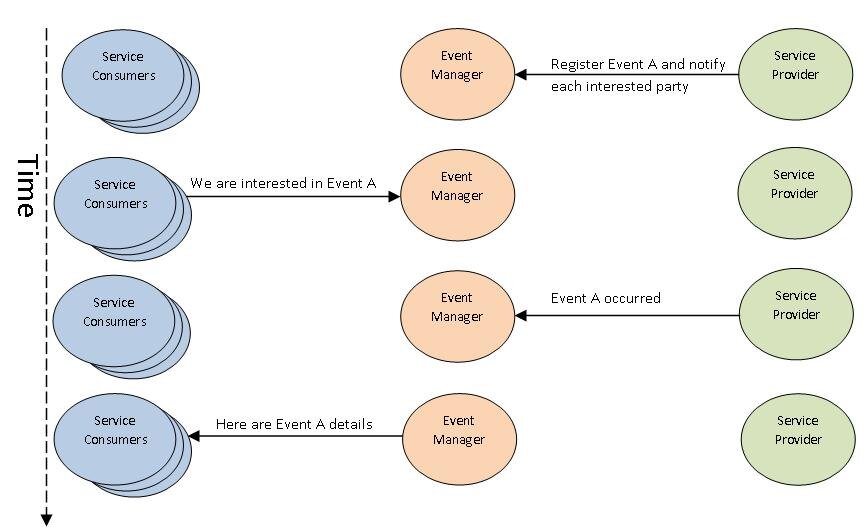
Because of its unique design, Kafka is the backbone for a wide range of real-time applications. Here are a few common examples:
-
Real-time Analytics: Companies stream user activity data into Kafka to power live dashboards that track website clicks, user engagement, and other key metrics as they happen.
-
Fraud Detection: Financial institutions process streams of transaction data through Kafka. By analyzing patterns in real-time, they can flag and block fraudulent activities the moment they occur.
-
Log Aggregation: Instead of managing log files from hundreds of different servers, organizations can have all their applications send logs to a central Kafka cluster. This makes it much easier to search, analyze, and monitor system health.
-
Internet of Things (IoT): Data from thousands of sensors—whether in a smart home or a factory floor—can be streamed into Kafka for real-time monitoring, analysis, and alerting.
Ready to check your understanding?
What is the primary architectural difference between Apache Kafka and traditional messaging systems like RabbitMQ?
True or False: Once a consumer reads an event from a Kafka topic, the event is immediately and permanently deleted to save space.
Kafka's ability to handle high-volume, real-time data streams has made it an essential tool in modern data engineering. By acting as a central, durable log for all events, it provides a powerful foundation for building responsive and data-driven applications.