Ample Reserve Markets in Economics
Introduction to Monetary Policy
The Economy's Thermostat
Every country has an economy, and just like a house, it can run too hot or too cold. When it's too hot, prices rise quickly, a situation called inflation. When it's too cold, the economy shrinks, and people lose jobs, which is a recession. Monetary policy is the set of tools a central bank uses to act like a thermostat, trying to keep the economy at a comfortable temperature.
A central bank is a special financial institution that manages a country's currency, money supply, and interest rates. In the United States, the central bank is the Federal Reserve, often called "the Fed." In other countries, it might be the Bank of England, the European Central Bank, or the Bank of Japan. These institutions work behind the scenes to steer the economy toward a steady path.
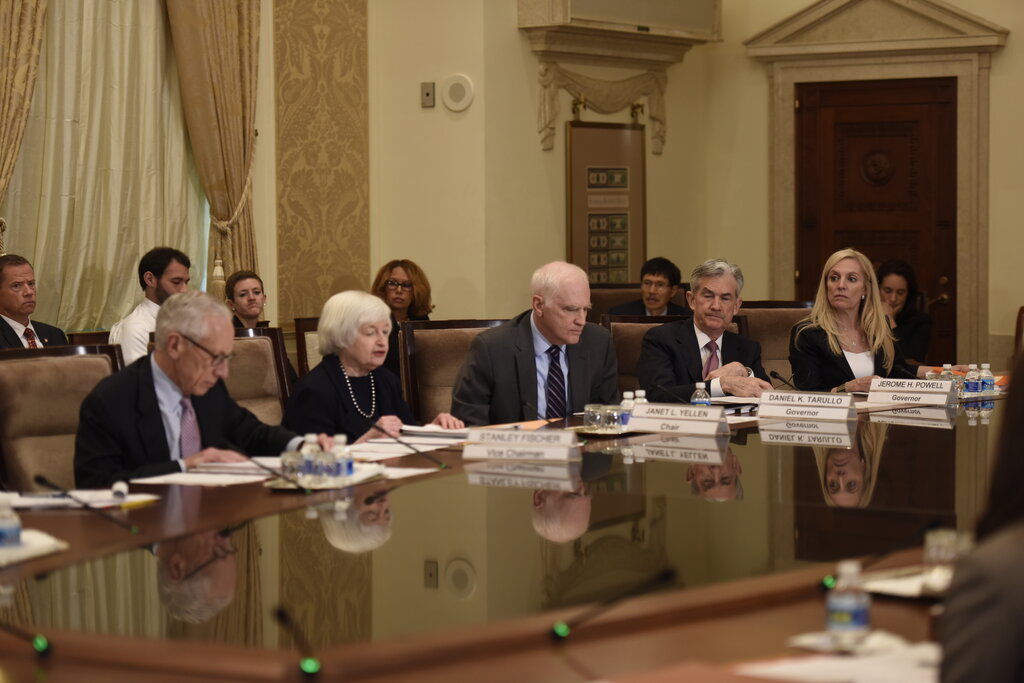
The Goals of Monetary Policy
A central bank doesn't just act randomly. It has specific goals it's trying to achieve. For the U.S. Federal Reserve, these goals are often called the "dual mandate."
The two main goals are:
- Price Stability: Keeping inflation low and predictable.
- Maximum Employment: Helping as many people who want a job to have one.
Price stability is crucial. If prices are jumping around, it's hard for families to budget and for businesses to set prices or plan investments. A little bit of inflation, around 2% per year, is generally seen as a healthy sign of a growing economy. But high or unpredictable inflation erodes the value of money and creates uncertainty.
Maximum employment means creating the economic conditions for a strong job market. It doesn't mean zero unemployment—there will always be some people between jobs. Instead, the goal is to reach the highest level of employment that the economy can sustain without causing runaway inflation.
The Central Bank's Toolbox
To achieve its goals, a central bank uses several tools to influence the amount of money and credit in the economy. Think of these as the levers and dials on the economic thermostat.
Policy Rate
noun
The main interest rate that a central bank sets to influence the economy.
The most important tool is the policy rate. In the U.S., this is the target for the federal funds rate, which is the interest rate banks charge each other for overnight loans. While you don't pay this rate directly, it affects all other interest rates in the economy, from car loans and mortgages to credit card rates and business loans.
- To cool down the economy and fight inflation, the central bank raises the policy rate. This makes borrowing more expensive, which discourages spending and helps bring prices under control.
- To stimulate the economy during a downturn, the central bank lowers the policy rate. Cheaper borrowing encourages households and businesses to spend and invest, boosting economic activity.
But how does a central bank actually make interest rates go up or down? The main mechanism is open market operations (OMOs). This involves the central bank buying or selling government securities, like bonds, in the open market.
- To lower rates, the central bank buys bonds from commercial banks. It pays for these bonds by adding money to the banks' accounts. With more cash on hand, banks can lend it out more cheaply, and interest rates fall.
- To raise rates, the central bank sells bonds to banks. The banks pay for these bonds, which removes money from the banking system. With less cash available, lending becomes more expensive, and interest rates rise.
Two other tools worth knowing are the discount rate and forward guidance.
The discount rate is the interest rate at which commercial banks can borrow directly from the central bank. It usually acts as a ceiling for short-term rates and serves as a backstop for banks that need liquidity.
Forward guidance is all about communication. Central bankers will often make public statements about their future policy intentions. For example, they might signal that they plan to keep interest rates low for a specific period. This helps manage expectations in financial markets and can influence economic decisions today.
By using these tools in combination, central banks aim to guide the economy, smoothing out the booms and busts of the business cycle and working toward their goals of stable prices and maximum employment.
What is the primary purpose of monetary policy?
The "dual mandate" of the U.S. Federal Reserve refers to which two primary goals?