AI Without Coding
Introduction to Artificial Intelligence
What Is Artificial Intelligence?
Artificial Intelligence (AI) is the science of making computers do things that normally require human intelligence. This includes tasks like understanding language, recognizing patterns, solving problems, and learning from experience.
At its core, AI isn't about creating a conscious machine. It's about building systems that can process information and make decisions or predictions. Think of it as a tool, an incredibly powerful one, that extends our own abilities.
An AI system can correctly interpret external data, learn from it, and use those learnings to achieve specific goals through flexible adaptation.
A Brief History
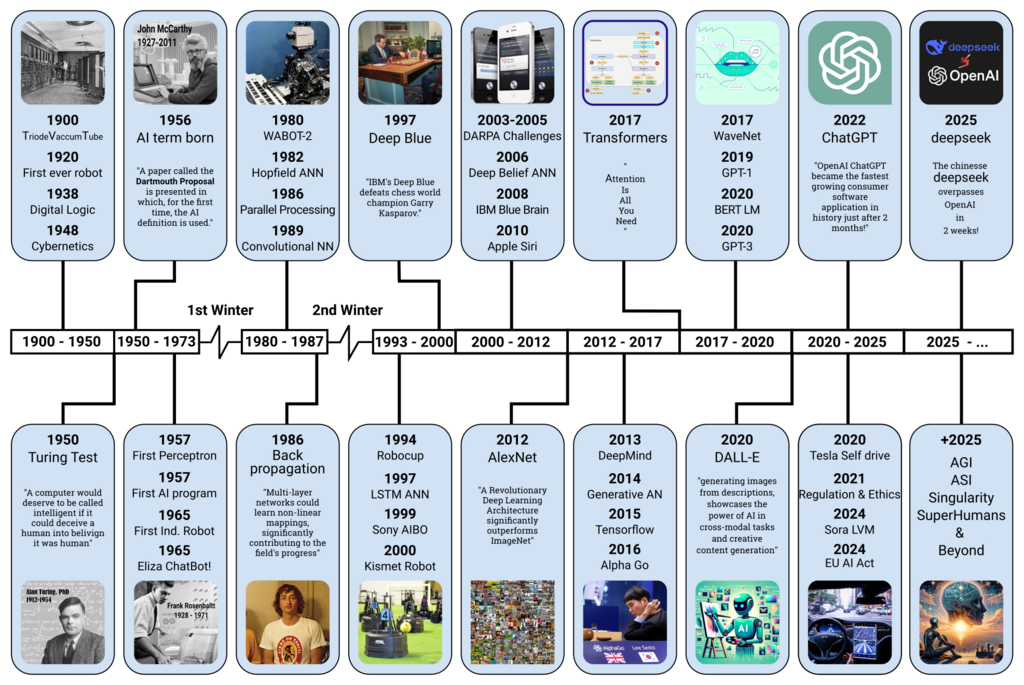
The idea of intelligent machines has been around for centuries, but the formal field of AI research began in the 1950s. Early researchers were incredibly optimistic, believing that a machine with human-like intelligence was just a few decades away.
This initial excitement led to periods of intense funding and progress, often called "AI summers." However, the challenges proved far greater than anticipated, leading to periods of reduced interest and funding known as "AI winters."
In recent years, two key factors have sparked a new AI renaissance: the availability of massive amounts of data and the development of powerful computers that can process it all. This has led to the breakthroughs we see today, from virtual assistants to self-driving cars.
Three Types of AI
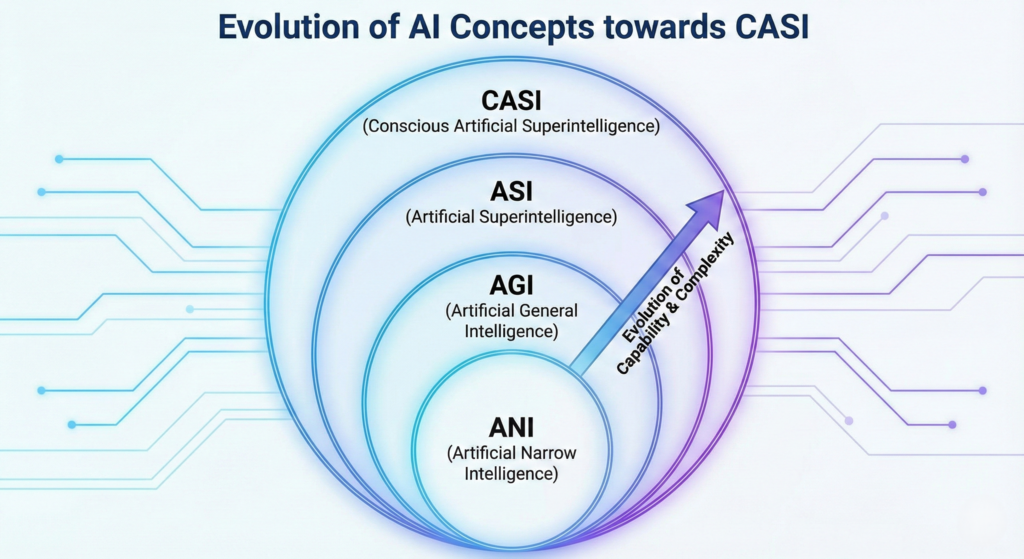
When we talk about AI, it's helpful to categorize it by its capabilities. There are three main types, though only one currently exists in practice.
Artificial Narrow Intelligence (ANI)
noun
This is the only type of AI we have achieved so far. ANI is designed to perform a single, specific task very well. It operates under a limited set of constraints and cannot perform tasks outside its designated field.
Other examples of ANI include the AI that recommends movies on streaming services, the software that recognizes your face to unlock your phone, and the opponent you play against in a computer chess game.
Next are two types of AI that are still purely theoretical.
Artificial General Intelligence (AGI)
noun
AGI is the type of AI often seen in science fiction. It refers to a machine with the ability to understand, learn, and apply its intelligence to solve any problem, much like a human being. An AGI could switch between tasks as different as cooking, programming, and composing music.
Artificial Superintelligence (ASI)
noun
ASI is a hypothetical form of AI that would possess intelligence far surpassing that of the brightest human minds in virtually every field, including scientific creativity, general wisdom, and social skills. The creation of ASI raises profound questions about the future of humanity.
AI in the Real World
Even though we only have Narrow AI, its applications are widespread and transformative. You likely interact with AI every day without even realizing it.
- Healthcare: AI helps doctors analyze medical images like X-rays and MRIs to detect diseases like cancer earlier and more accurately.
- Finance: Banks use AI to detect fraudulent transactions in real-time, protecting customers' accounts.
- Entertainment: Recommendation algorithms on platforms like Netflix and Spotify learn your preferences to suggest new movies and music you might enjoy.
- Transportation: AI is the brain behind navigation apps that find the fastest route and is the key technology in the development of self-driving cars.
- Customer Service: Many websites use AI-powered chatbots to answer common questions instantly, freeing up human agents to handle more complex issues.
Common Myths
As AI has become more prominent, so have the myths surrounding it. Let's clear up a few common ones.
Myth: AI is conscious and has emotions. Reality: Today's AI systems do not have consciousness, feelings, or self-awareness. They are sophisticated pattern-matching tools that process data to perform their functions.
Myth: AI will take over all human jobs. Reality: AI is changing the job market, not eliminating it entirely. While it automates certain tasks, it also creates new roles focused on developing, managing, and working alongside AI systems.
Myth: Superintelligent AI is right around the corner. Reality: Creating an AI with the general intelligence of a human is an extraordinarily complex problem. While progress is rapid, achieving AGI, let alone ASI, remains a distant and uncertain goal.
Ethical Considerations
The power of AI also brings significant responsibilities. As we develop and deploy these systems, we must carefully consider the ethical implications.
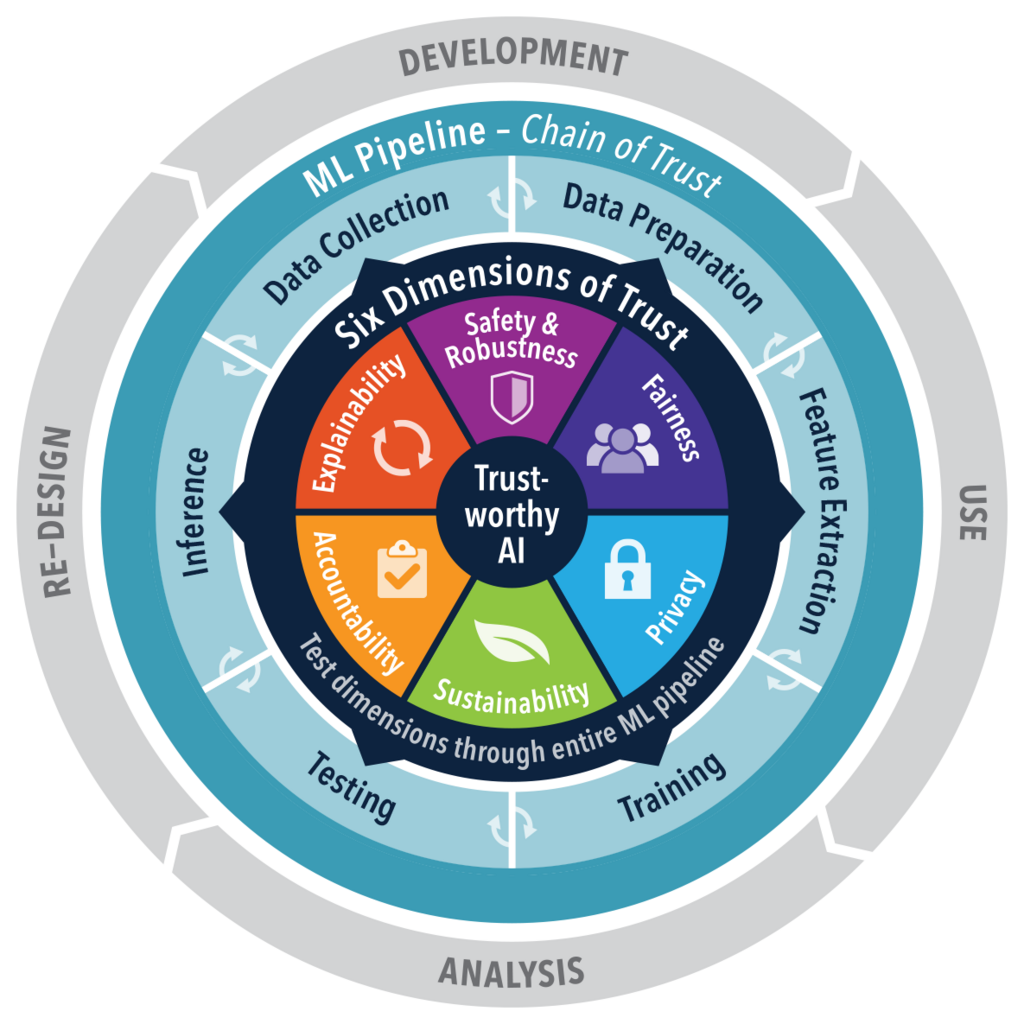
Key ethical challenges include:
Bias: An AI model is only as good as the data it's trained on. If the data reflects existing societal biases (related to race, gender, or other factors), the AI can learn and even amplify those biases in its decisions.
Privacy: Many AI systems require large amounts of data to function, which can create risks for personal privacy. Striking a balance between data-driven innovation and individual rights is crucial.
Accountability: If an autonomous system like a self-driving car makes a mistake, who is responsible? The owner? The manufacturer? The programmer? Establishing clear lines of accountability is a complex legal and ethical puzzle.
Ready to check your understanding? Let's see what you've learned.
What is the core purpose of Artificial Intelligence (AI)?
What two key factors have driven the recent surge in AI development, often called the 'AI renaissance'?
AI is a rapidly evolving field that is already reshaping our world. By understanding its fundamental concepts, types, and challenges, you can better navigate the changes it brings and appreciate its potential to solve some of humanity's biggest problems.