AI Transformers Explained
Introduction to Artificial Intelligence
What Is Artificial Intelligence?
Artificial Intelligence, or AI, is a field of computer science focused on creating machines that can perform tasks that typically require human intelligence. Think about how you learn, reason, solve problems, and understand language. The goal of AI is to replicate these capabilities in machines.
At its core, AI is about building smart systems that can sense their environment, think, learn, and take action.
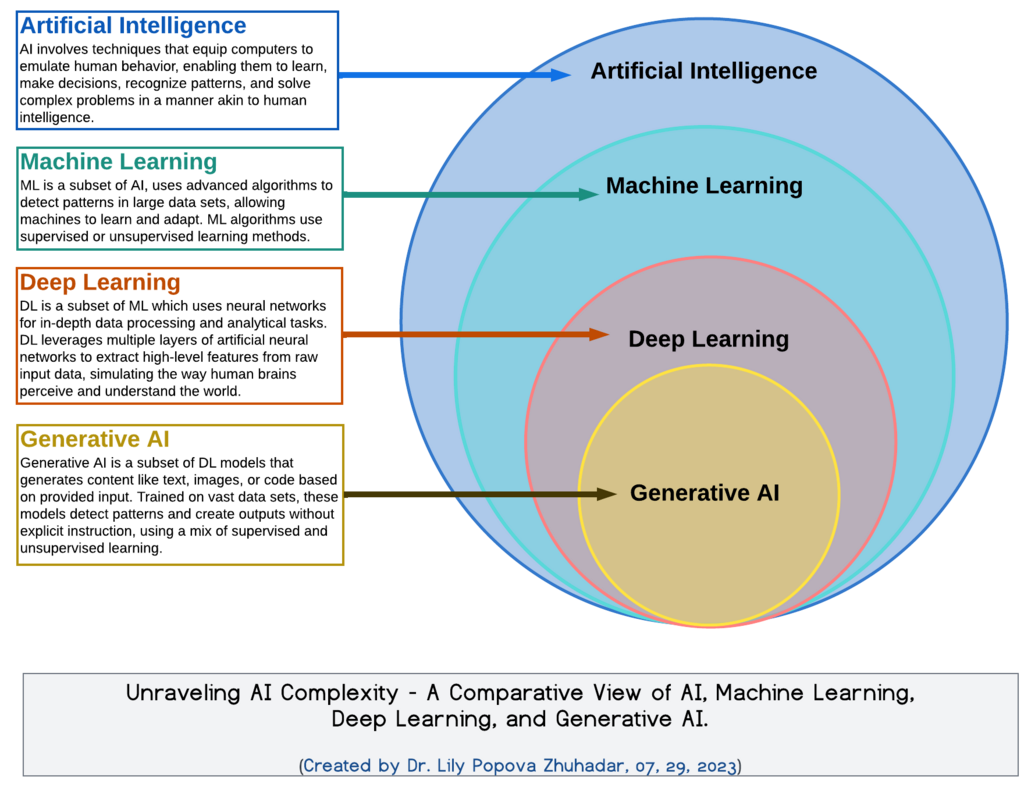
This broad field contains several specialized areas. The most important ones to know are Machine Learning and Deep Learning. Machine Learning is a subset of AI where systems learn from data to find patterns and make decisions without being explicitly programmed for every task. Deep Learning is a further subset of Machine Learning that uses complex, multi-layered neural networks inspired by the human brain to solve even more intricate problems, like recognizing images or translating languages.
A Brief History of AI
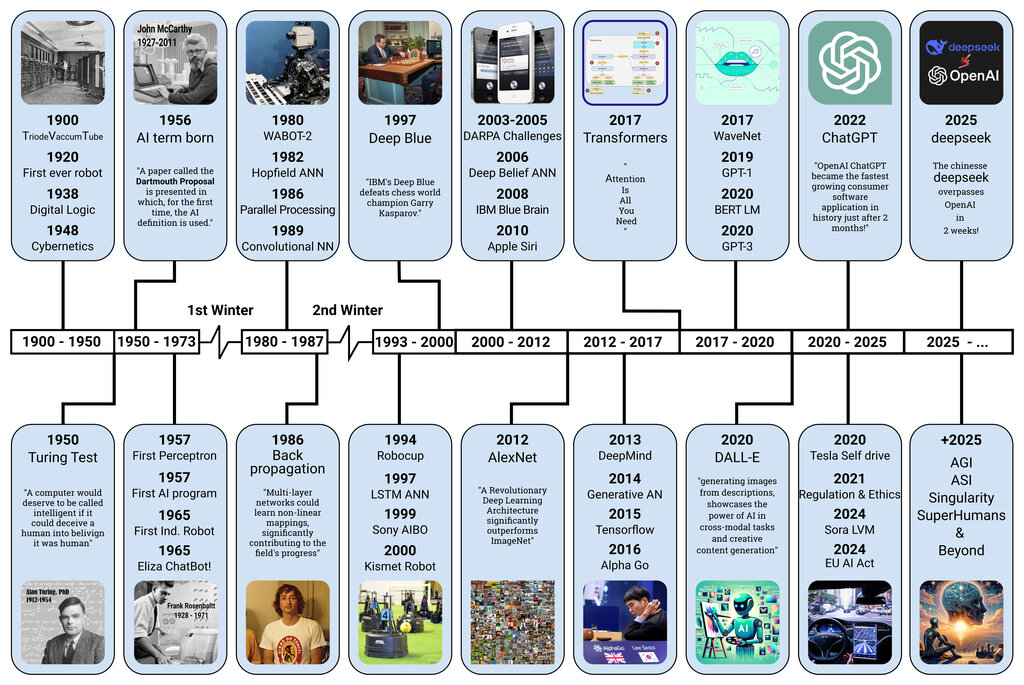
The dream of intelligent machines has been around for centuries, but the practical journey of AI began in the mid-20th century. Early AI systems were mostly rule-based. They operated on a simple logic: if a certain condition is met, then perform a specific action. Think of a basic spam filter. If an email contains the phrase "you've won a million dollars," then move it to the spam folder. These systems were powerful for their time but very rigid. They couldn't handle situations they weren't explicitly programmed for.
The next big leap was Machine Learning (ML). Instead of programmers writing rules, they created algorithms that could learn rules from data. You could feed an ML model thousands of labeled cat photos, and it would learn to identify a cat on its own. This was a major shift from programming solutions to training them.
More recently, Deep Learning (DL) has taken center stage. As a type of machine learning, it uses artificial neural networks with many layers to analyze data in a more sophisticated way. This approach has led to breakthroughs in everything from self-driving cars to the virtual assistants on our phones.
The Subfields of AI
AI isn't just one thing; it's a collection of specialized disciplines. Each focuses on a different aspect of intelligence.
| Subfield | Goal | Example |
|---|---|---|
| Natural Language Processing (NLP) | Understand and generate human language | Chatbots, language translation apps |
| Computer Vision | Interpret and understand information from images and videos | Facial recognition, medical image analysis |
| Robotics | Build machines that can move and perform tasks in the physical world | Manufacturing robots, autonomous drones |
| Expert Systems | Emulate the decision-making ability of a human expert in a narrow field | Medical diagnosis systems, credit approval software |
Ethics and Societal Impact
As AI becomes more powerful, it's crucial to consider its impact on society. The development and use of AI bring up important ethical questions that we need to address.
One of the biggest challenges is bias. AI models learn from the data they are given. If that data reflects existing societal biases, the AI will learn and even amplify them. For example, if a hiring algorithm is trained on historical data where managers were predominantly men, it might learn to unfairly favor male candidates.
Other concerns include privacy, as AI systems often require large amounts of personal data to function, and accountability. When a self-driving car causes an accident, who is responsible? The owner, the manufacturer, or the programmer? These are complex questions without easy answers.
The societal impacts are also vast. AI is transforming industries, automating jobs, and changing how we interact with technology and each other. From the algorithms that recommend what you watch next to the systems that help doctors detect diseases earlier, AI is already woven into the fabric of daily life.
Developing AI responsibly means building systems that are fair, transparent, and accountable. It's not just about what AI can do, but what it should do. Understanding these foundational concepts is the first step toward navigating the future of this transformative technology.
Which statement best describes the relationship between Artificial Intelligence (AI), Machine Learning (ML), and Deep Learning (DL)?
Early AI systems were primarily "rule-based." What was the main limitation of this approach?