AI Scriptwriting Assistance
Introduction to AI in Scriptwriting
A New Writing Partner
Artificial intelligence is changing how stories are told on screen. For scriptwriters, it's not a replacement but a new kind of collaborator. Think of it as a tireless brainstorming partner, one that can help you get past a blank page or explore a dozen different plot twists in minutes.
AI tools can generate character sketches, suggest dialogue for a tricky scene, or outline an entire episode based on a simple premise. The writer is still the visionary. They provide the initial spark, guide the process, and make the crucial creative decisions. The AI simply offers possibilities, helping to make the development process faster and more dynamic.
A writer might ask an AI to brainstorm three different ways a detective could discover the crucial clue, then choose the most compelling option to develop further.
From Simple Rules to Creative Prose
The idea of computers writing stories isn't new. Early attempts in the mid-20th century relied on strict rules and templates. The results were often clunky and predictable because the programs didn't truly understand language; they just filled in blanks.
The breakthrough came with the rise of large language models (LLMs). Instead of following rigid instructions, these models are trained on immense libraries of books, articles, and scripts. By analyzing these texts, they learn the patterns, styles, and structures of human writing. This allows them to generate text that is not only grammatically correct but also contextually relevant and surprisingly creative.
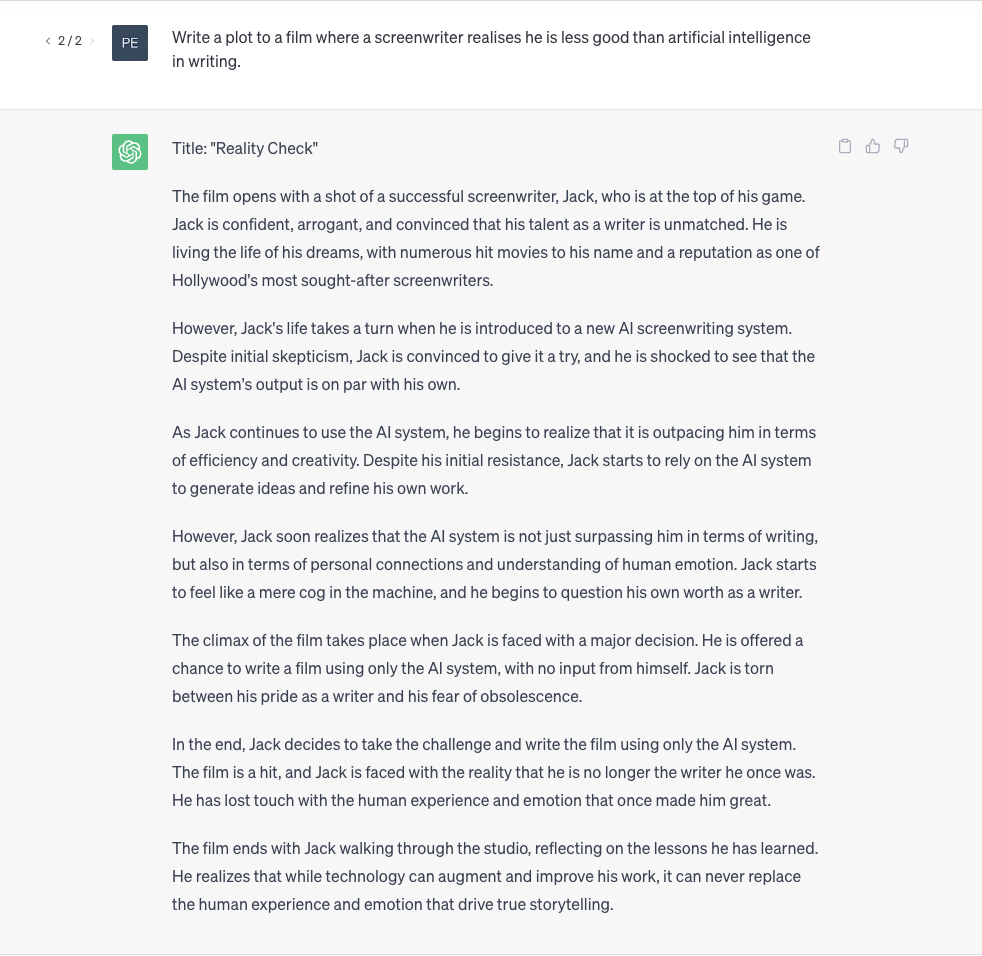
This shift from rule-based systems to learning-based models is the key difference between early text generators and the powerful creative tools available today. An old program might have been able to write, "The hero enters the castle." A modern AI can describe the castle's towering spires, the chill in the air, and the hero's inner thoughts as they step across the threshold.
Tools of the Trade
Writers today have access to a growing range of AI-powered tools. These can be broadly divided into two categories: general-purpose chatbots and specialized software with integrated AI features.
| Tool Type | Best For | Examples |
|---|---|---|
| General AI Chatbots | Brainstorming, outlining, dialogue generation | ChatGPT, Claude, Gemini |
| Specialized Scriptwriting Software | Formatting, structure, character management | Final Draft, Scrivener, Celtx |
Many writers use a combination of both. A chatbot can be a great starting point for raw ideas and text, which can then be imported into professional scriptwriting software for formatting and refinement. These specialized programs are now beginning to include their own built-in AI assistants, streamlining the workflow even further.
Writers and teams now rely on AI to:Quickly generate fresh plot ideas and character arcsOutline scenes and dialogue with minimal effortBreak down complex story elements into clear summariesTransform scattered notes into organized scripts, shot lists, or production tasksIntegrated into familiar tools like documents, whiteboards, and task managers, AI in platforms such as ClickUp Brain supports your creative flow by turning inspiration into structured, manageable projects.
Changing the Industry Landscape
The integration of AI is already having a noticeable impact on the film and television industry. Studios and production companies can use these tools to accelerate the development phase, testing out more concepts in less time. A writer's room might use an AI to quickly generate summaries for dozens of potential storylines for an upcoming season.
This technology also lowers the barrier to entry for independent creators. A filmmaker with a great idea but a small budget can use AI to help flesh out a script, create a compelling pitch, and move their project forward. By handling some of the heavy lifting in the early stages, AI allows creators to focus more of their energy on honing the story's unique voice and vision.
As these tools become more sophisticated, their role in the creative process will continue to evolve. For now, they serve as powerful assistants that can augment, but not replace, human creativity.
What is the primary role of AI for a scriptwriter, as described in the provided text?
What is the key technological shift that distinguishes modern AI writing tools from early text generators?