AI Process Optimization Explained
Introduction to AI Process Optimization
What Is AI Process Optimization?
Think of an AI system as a high-performance engine. You wouldn't just build it and hope for the best. You'd tune it, tweak it, and make sure it runs as smoothly and efficiently as possible. That's the core idea behind AI process optimization.
It’s the practice of making AI systems more effective by improving their underlying processes. This isn't about rewriting the entire AI from scratch. Instead, it’s about refining how it works to get better results using fewer resources, like computing power, time, and money.
AI for process optimization refers to the use of artificial intelligence technologies to enhance, streamline, and automate business processes.
An unoptimized AI might be slow, expensive to run, or make less-than-ideal decisions. By optimizing its processes, we can make it faster, more accurate, and more cost-effective. It’s a crucial step that turns a functional AI into a truly powerful tool.
The Payoff
Why bother with optimization? The benefits are significant and impact everything from budgets to outcomes.
First, there's efficiency. An optimized AI can process information and complete tasks faster. For a company that relies on AI for thousands of daily operations, shaving even a few seconds off each task adds up to huge time savings.
Next comes cost reduction. AI models, especially large ones, require a lot of computational power, which costs money. A more efficient model uses less energy and processing power, directly lowering operational costs.
Finally, optimization often leads to better performance. By refining the process, the AI can produce more accurate predictions and more reliable results. This could mean more accurate medical diagnoses, smarter financial forecasts, or more relevant search results.
How It's Done
There are several ways to optimize an AI system, and they often start long before the AI is even running. It's a continuous cycle of refinement.
One of the first steps is data optimization. AI learns from data, so the quality of that data is critical. This involves cleaning the data to remove errors, getting rid of irrelevant information, and ensuring it's in the best possible format for the AI to learn from. Think of it as providing the AI with high-quality fuel.
Another method is model simplification. Sometimes, an AI model can be overly complex for the task at hand, like using a sledgehammer to crack a nut. Optimization can involve trimming the model down, making it simpler and faster without sacrificing its effectiveness.
We can also make algorithmic adjustments. An algorithm is the set of rules an AI follows to solve a problem. Sometimes, a different set of rules or a different approach can solve the same problem much more efficiently.
Algorithm
noun
A process or set of rules to be followed in calculations or other problem-solving operations, especially by a computer.
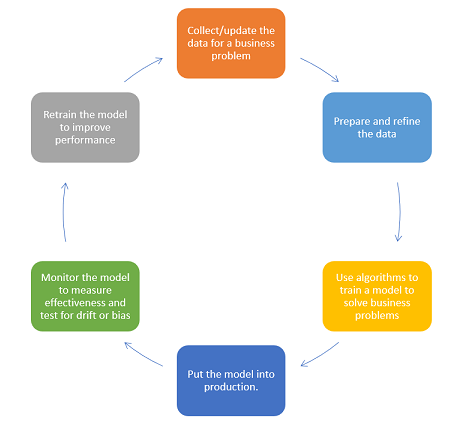
Ultimately, optimization is an iterative loop. You build the AI, test its performance, identify bottlenecks, and make improvements. Then you do it all over again.
Real-World Wins
AI process optimization is already making a big impact across many industries.
In logistics and shipping, companies use AI to optimize delivery routes. By analyzing traffic patterns, delivery windows, and vehicle capacity, AI can find the most efficient path, saving fuel and ensuring packages arrive on time. It can even determine the most efficient way to pack cargo inside a vehicle.

In manufacturing, AI systems monitor machinery on the factory floor. By analyzing sensor data, they can predict when a part is likely to fail. This allows the company to perform maintenance proactively, preventing costly shutdowns and production delays.
Even customer service benefits. AI-powered chatbots are optimized to understand user questions more accurately and provide helpful answers instantly. This frees up human agents to handle more complex issues and improves the overall customer experience.
In each case, optimization transforms AI from a novel technology into a practical, value-driving tool.
Ready to check your understanding of AI process optimization?
What is the primary goal of AI process optimization?
A logistics company uses an AI to plan its delivery routes. After optimization, the AI uses less computational power and finds shorter routes. What is a direct benefit of this?
AI process optimization is a fundamental practice that ensures artificial intelligence systems are not just powerful, but also practical and efficient. By continuously refining data, models, and algorithms, we unlock the full potential of AI to solve real-world problems more effectively.