AI Platforms for Online Business Growth
Introduction to AI Platforms
What Is an AI Platform?
Think of an AI platform as a professional-grade kitchen for building artificial intelligence. If you wanted to cook a gourmet meal, you could buy all the raw ingredients, source the specific pots and pans, and build your own oven. Or, you could step into a kitchen that already has everything: a stocked pantry, top-of-the-line appliances, and workstations ready to go. AI platforms are that fully-equipped kitchen.
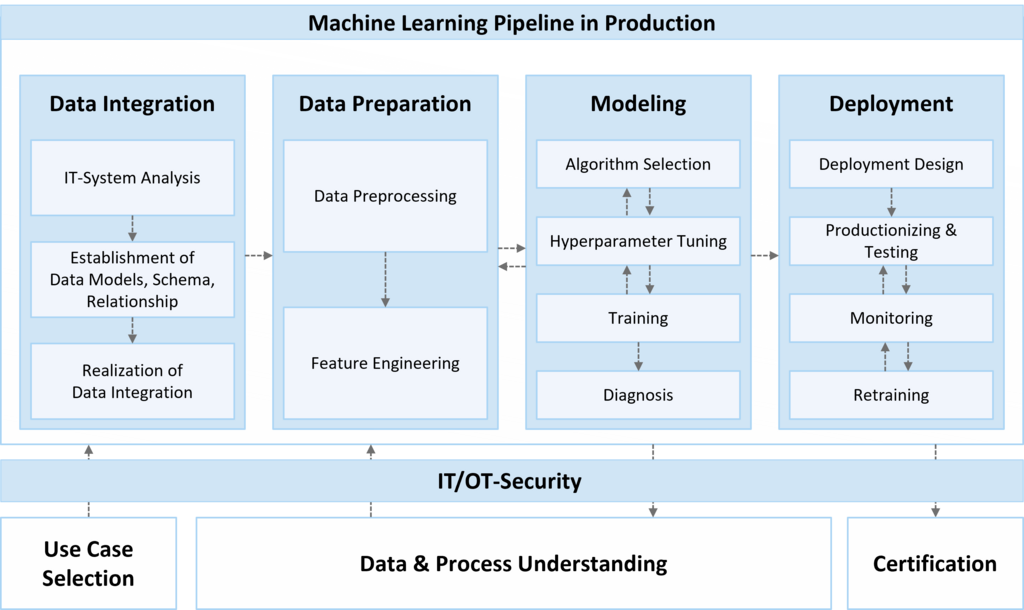
They are comprehensive software environments that provide all the tools needed to develop, train, and deploy AI models. Instead of starting from scratch, developers and businesses can use a platform to manage the entire AI lifecycle, from handling data to launching a finished application. The main purpose is to simplify the complex process of creating AI solutions, making it faster and more efficient.
An AI platform handles the heavy lifting of infrastructure, so you can focus on solving your specific business problem.
Key Components
Most AI platforms are built around a few core components that work together. Continuing our kitchen analogy, these are the essential stations for any chef.
Data Management: This is the pantry. Before you can cook, you need quality ingredients. This component includes tools for collecting, storing, cleaning, and labeling data. A model is only as good as the data it's trained on, so this stage is crucial.
Model Development: This is the cooking station. Here, you use your prepared data to build and train the AI model. Platforms provide pre-built algorithms, frameworks, and collaborative environments (like digital notebooks) where developers can experiment and create their models.
Deployment and Management: This is the serving window and restaurant floor. Once a model is trained, it needs to be put to work in a real application. This component helps you launch the model, connect it to your website or app, and monitor its performance to make sure it's working correctly and delivering accurate results. It also handles scaling, so if your app suddenly gets more popular, the AI can handle the increased traffic.
Integrating AI into Your Business
So how does this all connect to an online business? AI platforms are designed to integrate with the tools you already use. This is often done through something called an API (Application Programming Interface), which is like a standardized messenger that lets different software systems talk to each other.
For example, you could use an AI platform to build a model that provides personalized product recommendations. Once the model is built and deployed on the platform, your e-commerce website can send it a message (via an API call) with a customer's browsing history. The model then instantly sends a message back with a list of recommended products to display on the site.
This same principle applies to many business applications:
- Customer Support: An AI chatbot built on a platform can integrate with your website's messaging widget.
- Marketing: A model could analyze customer data from your CRM to predict which users are most likely to buy, allowing you to create targeted ad campaigns.
- Content Creation: An AI writing assistant can be integrated into your blogging software to help draft articles or social media posts.
You don't need to be an expert in the underlying technology to get started. Many platforms offer "no-code" or "low-code" interfaces, which use visual, drag-and-drop tools to build AI solutions. This makes it possible for business owners and marketers to experiment with AI without writing a single line of code.
No-code AI platforms provide a practical way to apply AI without coding expertise.
Major cloud providers like Amazon (AWS), Google (Vertex AI), and Microsoft (Azure AI) offer powerful, comprehensive platforms. There are also many specialized platforms that focus on specific tasks, like building chatbots or analyzing images. Choosing the right one depends on your business goals, technical comfort level, and budget. By providing the core infrastructure and tools, these platforms make it easier than ever to bring the power of AI into your business.