AI Operations
AI Model Basics
What is an AI Model?
Think of an AI model as a specialized program that has been trained, not just coded, to perform a task. Instead of following a rigid set of instructions written by a programmer, an AI model learns from data. It's like the difference between giving someone a detailed recipe and having them taste thousands of dishes to figure out the recipe on their own.
The goal of an AI model is to recognize patterns. After analyzing vast amounts of information, it can make predictions, classify information, or generate new content based on the patterns it has learned.
An AI model is a system that learns from data to find patterns, which it then uses to make predictions or decisions about new, unseen data.
The Core Components
Every AI model is built on three fundamental pillars: data, an algorithm, and the resulting trained model.
1. Data: This is the raw material. It can be anything—images, text, numbers, or sounds. The quality and quantity of the data are crucial. A model trained on a thousand pictures of cats will be much better at identifying felines than one trained on just ten.
2. Algorithm: This is the set of rules or the procedure that the model uses to learn from the data. It defines how the model will adjust itself to find patterns. Think of it as the learning strategy.
3. The Trained Model: This is the final product. After the algorithm has processed the data, the output is a trained model ready to be used. It has internalized the patterns from the data and can now apply its knowledge to new situations.
Types of AI Models
The term "AI" is a broad umbrella that covers several different approaches. Two of the most common types of models you'll encounter are Machine Learning and Deep Learning.
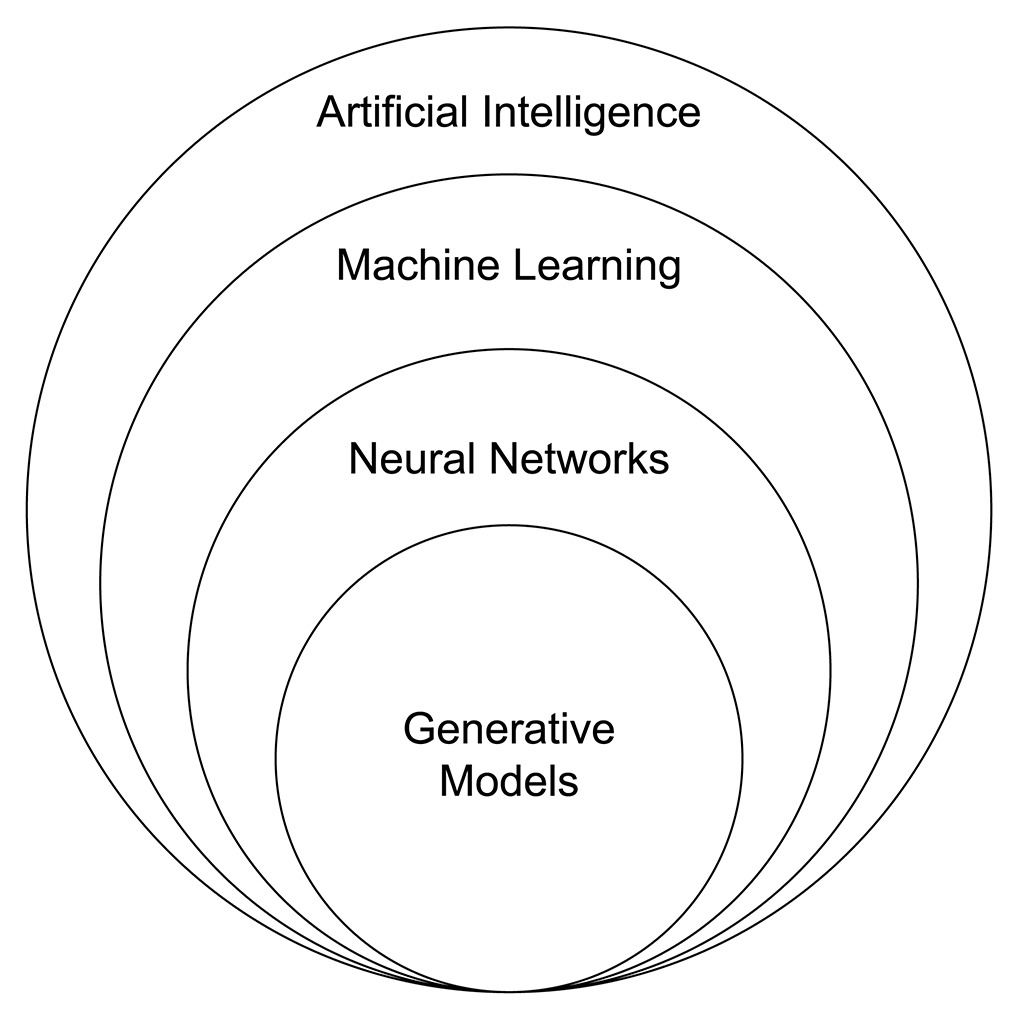
Machine Learning (ML) models are trained to find patterns in data and make predictions. They can classify emails as spam, forecast sales, or recommend your next movie. They get better with more data but are often guided by human-engineered features.
Deep Learning (DL) is a more advanced type of machine learning. It uses structures called neural networks, which are loosely inspired by the human brain. These networks have multiple layers that allow them to learn complex patterns directly from the data. Deep learning powers things like voice assistants and self-driving car perception systems.
AI Models in Action
You interact with AI models every day, often without realizing it. They are the engines behind many modern conveniences. Here are a few common examples:
| Application | What the AI Model Does |
|---|---|
| Email Spam Filter | Classifies incoming emails as either 'spam' or 'not spam' based on words, senders, and other patterns. |
| Recommendation Engines | Predicts which movies, songs, or products you might like based on your past behavior and the behavior of similar users. |
| Virtual Assistants | Uses natural language processing to understand your spoken commands and find the information you need. |
| Medical Imaging | Analyzes X-rays or MRIs to identify potential signs of disease that a human eye might miss. |
In each case, the model isn't following explicit instructions for every possible scenario. Instead, it's applying the patterns it learned from its training data to make an informed, probabilistic decision.
Which statement best describes how an AI model learns?
An AI model is built on three fundamental pillars. Which of the following is NOT one of them?
Understanding these basics is the first step to seeing how AI works and what it can do.