AI Memory Explained
Introduction to AI Memory
What Does an AI Remember?
Think about your own memory. You remember facts, faces, and feelings. You recall how to ride a bike and what you talked about with a friend yesterday. This ability to store and retrieve information is what allows you to learn, make decisions, and navigate the world. For an AI to be truly intelligent, it needs a similar capability.
AI memory is the mechanism that allows an artificial intelligence system to retain and recall information. Without it, an AI would be stuck in the present moment, unable to learn from past experiences or maintain context in a conversation. Every interaction would be like starting from scratch.
Memory and context are the backbone of intelligent agent architecture in AI.
This ability to remember is what elevates an AI from a simple calculator to a dynamic system that can improve over time. Just like in humans, AI memory isn't a single, simple thing. It operates on different timescales for different purposes.
Short-Term vs. Long-Term Memory
AI systems, much like people, have different kinds of memory for different jobs. The most basic distinction is between short-term and long-term memory.
Short-term memory is the AI's working notepad. It holds information relevant to the current task. Think of a chatbot. To have a coherent conversation, it needs to remember what you just said. If you ask, “What about for a smaller car?” the chatbot uses its short-term memory to recall you were previously discussing vehicle options. Without this, its response would make no sense.
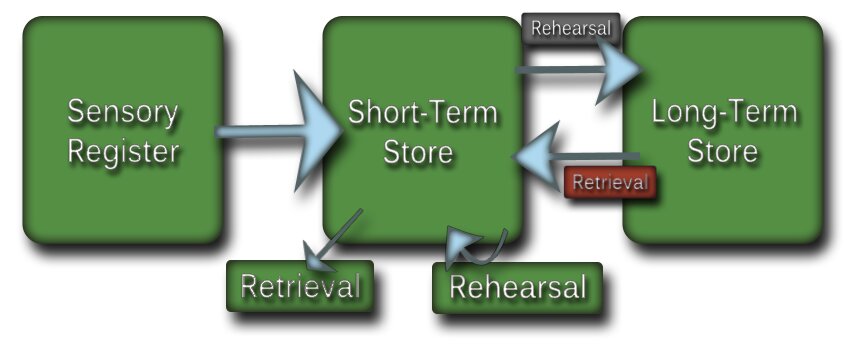
Long-term memory, on the other hand, is the AI's library of accumulated knowledge. This is where an AI stores information over extended periods, allowing it to learn and grow. A navigation app might remember your home and work addresses. A recommendation engine learns your taste in movies by storing a history of what you've watched and rated. This stored knowledge allows the AI to personalize its responses and become more useful over time.
Memory in Action
So how does memory actually help an AI perform tasks? It's fundamental to its two most important capabilities: learning and decision-making.
When it comes to learning, memory is everything. Machine learning is the process of an AI improving its performance by analyzing data. That data has to be stored in the AI's memory. A self-driving car's AI, for example, has a long-term memory filled with millions of miles of driving data. It remembers countless scenarios—a pedestrian stepping into the road, a sudden stop from the car ahead—and learns the safest response for each one.
For an AI, learning isn't an abstract idea. It's the practical result of storing outcomes and experiences in memory to guide future actions.
This directly impacts decision-making. An AI with memory can make informed choices based on past results. An AI designed to play chess doesn't just know the rules; it remembers thousands of previous games. It recalls which opening moves led to a win and which were disastrous. When you're making a move, the AI consults this vast memory to predict your strategy and choose the best possible counter-move.
In short, memory provides the context and experience an AI needs to act intelligently. Now, let's test what you remember about AI memory.
What is the fundamental purpose of memory in an AI system?
A navigation app remembers your 'Home' address so you can quickly get directions. What kind of memory is this an example of?