AI Agents for Business
Introduction to AI Agents
What Is an AI Agent?
An AI agent is a program that can sense its environment, make decisions, and take actions to achieve a specific goal. Think of it as an autonomous entity that acts on your behalf. It's more than just a simple script; it's designed to be a problem-solver in a dynamic world.
The core loop of any AI agent is simple: sense, think, act. It observes the world around it, processes that information, and then does something to move closer to its objective.
Imagine you hire a personal assistant to manage your travel plans. You don't tell them every single step, like "Open a web browser, type in the airline's URL, click on flights..." Instead, you give them a goal: "Book me a round-trip flight to New York next week, keeping the budget under $500." The assistant then uses their knowledge and tools to figure out the best way to accomplish this. AI agents work on the same principle, but in the digital realm.
agent
noun
An entity that perceives its environment through sensors and acts upon that environment through actuators.
Key Characteristics
What makes an AI agent different from a standard computer program? A few key traits define them.
Autonomy: Agents can operate independently without direct human intervention for every step. They are given a goal and have the freedom to figure out how to achieve it.
Adaptability: The environment an agent operates in is rarely static. An agent must be reactive, sensing changes and adjusting its actions accordingly. The best agents are also proactive, anticipating future changes and planning for them. Many are also capable of learning from experience to improve their performance over time.
Goal-Oriented Behavior: Every agent is driven by a purpose. Its actions are not random; they are deliberate steps taken to accomplish a predefined objective. This could be anything from winning a game of chess to optimizing a company's supply chain.
A Spectrum of Agents
Not all agents are created equal. They range from simple programs that react to basic triggers to complex systems that can strategize and learn. Understanding these types helps clarify how they can be applied in different situations.
| Agent Type | How It Works | Simple Example |
|---|---|---|
| Simple Reflex | Acts only based on the current situation, ignoring past history. | A smart thermostat turning on the heat when the temperature drops. |
| Model-Based | Maintains an internal model of the world to track things it can't see. | A self-driving car tracking another car after it passes behind a truck. |
| Goal-Based | Chooses actions that will help it achieve a specific, desirable state. | A GPS app calculating the fastest route to a destination. |
| Utility-Based | Aims to maximize its own "utility" or happiness, especially with conflicting goals. | A shopping bot finding a product that best balances price, quality, and shipping time. |
| Learning | Can improve its performance by learning from its actions and their outcomes. | A spam filter that gets better at catching junk email over time. |
Most sophisticated agents used in business today are hybrids, combining several of these characteristics. For instance, a learning agent likely also has goals and a model of its environment.
From Sci-Fi to Business Tool
The idea of artificial agents has been around for decades, long a staple of science fiction. Early real-world examples were highly constrained, rule-based systems. Think of simple video game enemies that follow a fixed path or early chatbots that responded to keywords with pre-programmed answers.
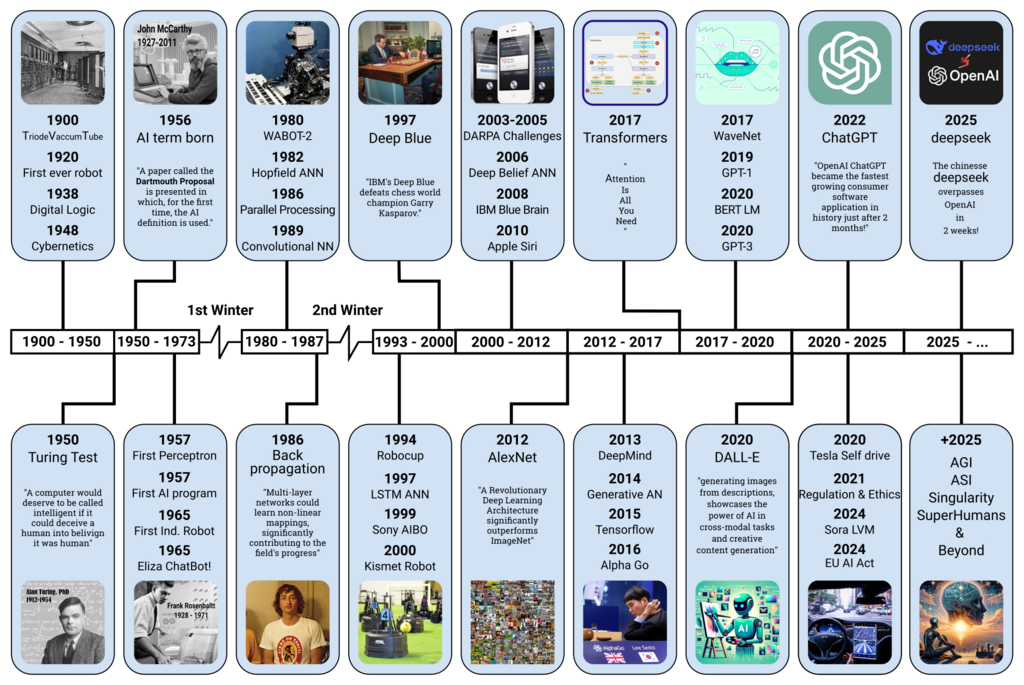
The big change came with the rise of machine learning and, more recently, large language models (LLMs). This evolution shifted agents from following rigid instructions to making intelligent, data-driven decisions. Instead of being programmed for every possibility, they can now learn patterns, understand nuanced requests, and adapt to new information.
This leap in capability is why AI agents are becoming so significant in modern business. They are no longer just simple automation tools. They can function as expert analysts, tireless customer service representatives, and efficient operations managers, tackling complex tasks that require reasoning and adaptability.
Now that we've covered the basics of what AI agents are, let's test your understanding.
What is the primary function of an AI agent?
The key trait of an AI agent that allows it to operate without step-by-step human direction is called:
By understanding these fundamentals, you're better equipped to see how these powerful tools can be integrated into various business processes.