AI Agents Explained
Introduction to AI Agents
What Is an AI Agent?
At its core, an artificial intelligence (AI) agent is something that acts. It's a system that can observe its surroundings and then decide to do something. Think of a robot vacuum cleaner. It doesn't just bump around randomly. It senses where the walls are, detects dirt on the floor, and then moves around to clean it up. That's an AI agent in action.
An agent is anything that can be viewed as perceiving its environment through sensors and acting upon that environment through actuators.
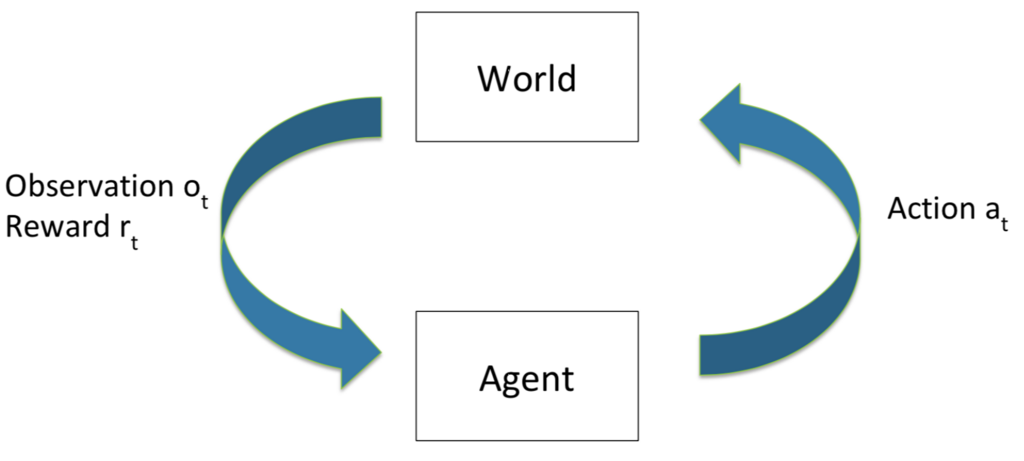
This definition is key. Agents aren't just passive programs; they are active participants in a digital or physical world. They follow a simple but powerful loop: perceive, think, and act. This loop is what allows an AI to go from simply processing data to interacting with the world in a meaningful way.
The Core Components
Every AI agent has a few fundamental parts that allow it to operate. Let's break down the essential components that make an agent work.
Sensor
noun
A device or software component that detects events or changes in its environment and sends the information to the agent.
Sensors are the agent's connection to the outside world. They gather the raw data, called percepts, that the agent needs to make decisions. For a self-driving car, sensors include cameras, GPS, and radar. For a smart assistant like Siri or Alexa, the primary sensor is a microphone.
Actuator
noun
A component responsible for moving or controlling a mechanism or system. It's how an agent acts on its environment.
If sensors are the agent's senses, actuators are its hands, legs, or voice. They are the tools an agent uses to perform actions. A robot vacuum's actuators are its wheels and suction motor. A smart thermostat's actuator is the switch that turns your home's heating or air conditioning on and off.
The final piece of the puzzle is the agent function. This is the internal logic or "brain" that connects the agent's perceptions to its actions. It's a rule that determines what the agent should do in response to any given input from its sensors.
In its simplest form, the agent function maps a single percept to a single action. But more advanced agents base their decisions on the entire history of everything they've ever perceived. This history is called the percept sequence.
This formula simply means the agent's action is a function of all the percepts it has received up to that point. This ability to consider history is what allows agents to learn and adapt over time, making them a cornerstone of modern artificial intelligence.
What is the fundamental loop that an AI agent follows?
In the context of a robot vacuum cleaner, the wheels and suction motor are examples of its ______.
These basic building blocks—sensors, actuators, and an agent function—form the foundation for all types of AI agents, from simple automated systems to complex, intelligent robots.