Agent-Based Programming
Introduction to Agent-Based Programming
Meet the Agent
Imagine you hire a personal assistant. You don't tell them how to book a flight—you just give them a goal: "Get me a round-trip ticket to Tokyo for next month, business class, under $3000." Your assistant then figures out the rest. They check different airlines, compare prices, consider layovers, and book the ticket. They operate on their own to achieve the goal you set.
In the world of software, this is what an agent does. An agent is an autonomous software entity that perceives its environment and acts upon it to achieve its goals. It's more than just a script that runs from top to bottom. It's a self-contained program with its own agenda.
Agents are defined by a few key characteristics:
Autonomy: An agent can operate without direct human control. It has its own internal state and makes its own decisions.
Reactivity: It can sense its environment (which could be a file system, a network, or a simulated world) and respond to changes in a timely fashion.
Pro-activeness: An agent doesn't just wait to be told what to do. It takes initiative to pursue its goals.
Social Ability: Agents can communicate with other agents using a common language. This allows for cooperation, coordination, and negotiation.
Agents vs Objects
If you're familiar with object-oriented programming (OOP), you might wonder how an agent is different from an object. Both are self-contained units with data and behavior.
The key difference is control. An object is passive. It has methods, but it does nothing until another object calls one of its methods. Think of a Car object in a program. It has a drive() method, but the car won't go anywhere until the main program logic calls myCar.drive().
An agent, on the other hand, is active. It has its own thread of control. It decides for itself when to act based on its goals and its perception of the environment. The agent chooses to drive, rather than waiting to be told. This shift from invoked behavior (objects) to autonomous behavior (agents) is the core of the paradigm.
| Feature | Object-Oriented Programming | Agent-Based Programming |
|---|---|---|
| Unit of Abstraction | Object (data and methods) | Agent (autonomous, goal-driven) |
| Control Flow | Passive; invoked by others | Active; has its own thread of control |
| Behavior | Defined by its public methods | Emerges from goals and rules |
| Communication | Method calls | Message passing, negotiation |
A Brief History
The idea of agent-based programming isn't new. It grew out of the field of Distributed Artificial Intelligence (DAI) in the late 1970s and 1980s. Researchers were exploring how to solve complex problems by breaking them down and having multiple intelligent systems work together.
This was a natural evolution from the centralized AI systems that came before. Instead of one giant "brain" solving a problem, DAI proposed a community of smaller, specialized experts that could collaborate. This model mirrored how human societies and organizations solve problems.
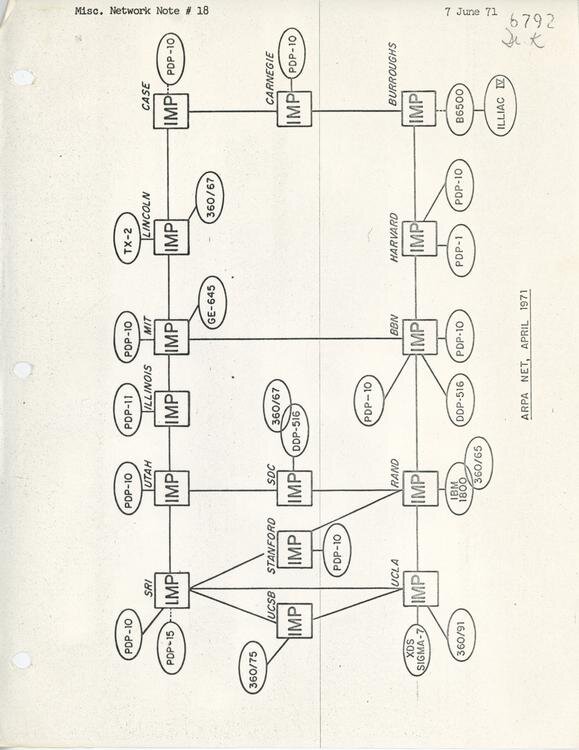
The development of networks like ARPANET, the precursor to the internet, also fueled this thinking. The network itself was a system of autonomous, communicating nodes, providing a real-world model for how distributed software could work.
Early theorists like Carl Hewitt proposed the "Actor model," a mathematical model of concurrent computation that treated "actors" as universal primitives. These actors were very similar to our modern concept of agents. They could make local decisions, create more actors, and send messages to each other.
Where Are Agents Used?
Agent-based systems are particularly useful for modeling complex systems where the overall behavior emerges from the interactions of many individual components. You can't easily predict the outcome with a simple equation; you have to simulate it.
Here are a few examples:
- Traffic Simulation: Each vehicle can be modeled as an agent with a simple goal (get to destination) and rules (don't crash, obey traffic lights). Simulating thousands of these agents reveals complex traffic patterns like jams and waves.
- Supply Chain Management: Companies, trucks, and warehouses can be modeled as agents that negotiate and cooperate to move goods efficiently. This helps identify bottlenecks and test new logistics strategies.
- Epidemiology: To model the spread of a disease, each person can be an agent. Their interactions determine how the virus moves through a population, allowing public health officials to test the potential impact of different interventions.
- Robotics: In a warehouse, a team of robots can act as a multi-agent system, coordinating to fetch and move packages without colliding.
Multi-agent systems excel at breaking down complex tasks into smaller sub-tasks that different agents can tackle in parallel.
The agent-based approach provides a powerful way to build software for complex, dynamic, and decentralized problems. By focusing on the autonomous behavior of individual components, it allows us to model and understand systems that would be impossible to design from a top-down perspective.
What is the primary characteristic that distinguishes a software agent from a simple script?
In object-oriented programming (OOP), an object is passive and waits for its methods to be called. How does an agent's control structure differ?