Advanced Software Engineering Concepts
Software Architecture
What Is Software Architecture?
Think of software architecture as the blueprint for a building. Before anyone lays a foundation or puts up a wall, an architect designs the structure. They decide where the rooms go, how the plumbing and electrical systems connect, and how people will move through the space. They're not deciding the paint color for the living room, but they are making the foundational decisions that determine if the house will be functional, safe, and last for decades.
Software architecture does the same for a software system. It's the high-level structure that defines how all the pieces fit together. It’s not about the specific lines of code, but about the major components, how they communicate with each other, and the rules that govern their relationships. A good architecture makes a system easier to build, update, and manage over time.
The software architecture of a system is the set of structures needed to reason about the system, which comprise software elements, relations among them, and properties of both.
Getting the architecture right is crucial because early decisions have long-lasting effects. A poor architectural choice can lead to a system that is slow, unreliable, and difficult to change. A solid architecture, on the other hand, creates a foundation for a system that can grow and adapt to new challenges.
Common Architectural Patterns
Architects don't start from scratch every time. They use established architectural patterns, which are proven, reusable solutions to common problems. Think of them as standard building styles, like a ranch house or a skyscraper. Each style is suited for different needs.
Two of the most common patterns are Layered Architecture and Microservices.
Layered (or N-Tier) Architecture This is a traditional and straightforward approach. It separates the application into distinct layers, each with a specific responsibility. A typical web application might have three layers:
- Presentation Layer: The user interface that people see and interact with.
- Business Logic Layer: The core of the application where the main processing happens.
- Data Layer: Responsible for storing and retrieving information from a database.
Each layer only communicates with the layer directly above or below it. This separation makes the system organized and easier to understand.
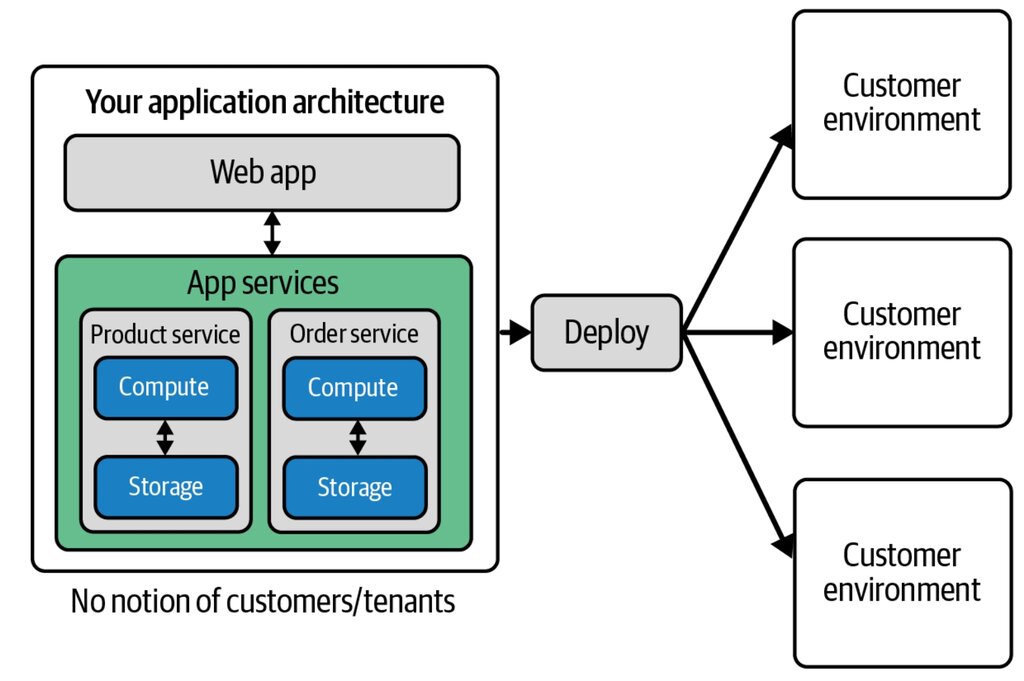
Microservices Architecture This pattern takes a different approach. Instead of building one large, monolithic application, you build a collection of small, independent services. Each service is self-contained, manages its own data, and handles a specific business function, like user authentication or payment processing.
These services communicate with each other over a network. The main advantage is flexibility. You can update, deploy, or scale each service independently without affecting the rest of the system. This is great for large, complex applications.
The Qualities of a System
A good blueprint does more than just define rooms; it also specifies things like the building's fire safety rating, energy efficiency, and ability to withstand an earthquake. In software, these are called quality attributes or non-functional requirements. They describe how well a system should do its job.
An architect must balance these attributes, as improving one can sometimes negatively impact another. For example, increasing security might add extra processing steps, slightly reducing performance. Making the right trade-offs is a key part of the job.
| Attribute | Description |
|---|---|
| Scalability | The system's ability to handle a growing amount of work or users. |
| Performance | How quickly the system responds to requests. |
| Maintainability | How easy it is to find and fix bugs or add new features. |
| Reliability | The system's ability to operate without failure for a specified period. |
| Security | The system's ability to protect data and defend against attacks. |
These qualities aren't an afterthought; they are central to the architectural design process. The chosen architecture directly determines whether the system can meet its quality goals.
The Role of the Architect
A software architect is a technical leader who bridges the gap between the business needs and the technical solution. They are responsible for making the high-level design choices that will guide the development team.
Their work involves:
- Understanding Requirements: Working with stakeholders to understand both functional needs (what the system does) and quality attributes (how well it does it).
- Making Key Decisions: Choosing architectural patterns, technologies, and standards for the project.
- Communication: Clearly documenting the architecture and explaining it to the development team, project managers, and business leaders.
- Oversight: Guiding the team to ensure the implementation stays true to the architectural vision.
Unlike other development roles that may concentrate on coding specific components or solving immediate technical problems, a Software Architect is tasked with envisioning the broader framework and guiding the project towards a cohesive and efficient software solution.
Finally, a key part of the process is documenting the architecture. This isn't just about creating diagrams; it's about recording the decisions, the trade-offs, and the reasoning behind them. Good documentation helps new team members get up to speed and provides a reference for future development.
Time to check your understanding.
Software architecture is most analogous to which of the following?
What is the primary benefit of a Microservices architecture?
Understanding software architecture is about seeing the big picture. It's the strategic thinking that happens before the coding begins, ensuring the final product is not just functional, but also robust, scalable, and maintainable for years to come.