Advanced Software Component Architecture
Advanced Architectural Patterns
Breaking Down Complexity
As applications grow, a single, monolithic codebase can become a bottleneck. Making a small change requires re-deploying the entire system, and a bug in one feature can bring everything down. Advanced architectural patterns offer ways to break down this complexity, creating systems that are more resilient, scalable, and easier to manage.
Microservices Architecture
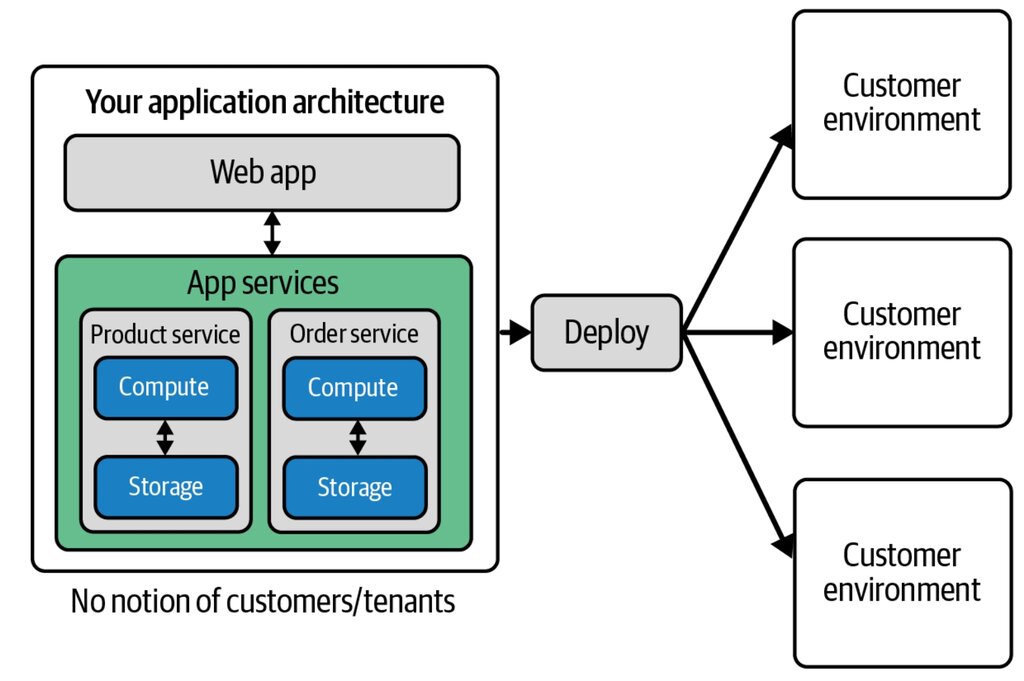
The microservices pattern structures an application as a collection of small, autonomous services. Think of a large e-commerce platform. Instead of one giant application handling everything, you have separate services for user authentication, product catalogs, shopping carts, and payments. Each service is a mini-application with its own database and logic.
This approach is built on a few core principles:
- Single Responsibility: Each service is designed to do one thing and do it well.
- Independent Deployment: A change to the payment service can be deployed without touching the product catalog. This allows teams to work independently and release updates faster.
- Decentralized Data: Each service manages its own data, preventing the database from becoming a single point of failure or a bottleneck for development.
The main benefit of microservices is agility. Teams can develop, deploy, and scale individual parts of an application without affecting the whole.
Event-Driven Architecture
An event-driven architecture (EDA) is built around the production, detection, and consumption of events. An event is a significant change in state, like a customer placing an order or an item's inventory level dropping below a threshold. In this model, services don't call each other directly. Instead, one service produces an event and broadcasts it. Other services that care about that event can listen and react accordingly.
This creates a loosely coupled system. The order service doesn't need to know about the shipping service or the notification service. It just needs to announce that an order was placed. Any number of other services can then spring into action.
Event
noun
A record of a significant change in state within a system. It's immutable, meaning it cannot be changed once created.
This pattern is highly effective for systems that need to respond to changes in real-time. Think about a ride-sharing app. When you request a ride, an event is created. The system doesn't poll every driver; instead, nearby drivers' apps are listening for that event and can respond. The first driver to accept triggers another event, which updates your app's status.
Component-Based Architecture
Component-based architecture focuses on decomposing a system into logical, reusable components. Unlike microservices, which are independently deployable processes, components are often parts of the same application that can be swapped in and out. A component encapsulates a specific set of functions and exposes them through well-defined interfaces.
Think of building with LEGOs. Each brick is a component with a standard interface (the studs and tubes). You can connect any brick to any other brick to build a larger structure. In software, a component might be a user interface widget, a data access layer, or a logging module. The primary advantage is reusability. A well-designed calendar component can be reused across many different applications within an organization, saving development time and ensuring consistency.
The architecture emphasizes modularity, relying on reusable components, templates, and visual tools to simplify app creation and maintenance.
The key is a strict separation of concerns. The rest of the application doesn't need to know how the component works, only what its interface is. This makes systems easier to maintain and upgrade. If a better logging component becomes available, you can simply swap out the old one without rewriting the rest of the application, as long as the new component adheres to the same interface.
Choosing the Right Pattern
No single pattern is perfect for every situation. The choice depends on your application's specific needs, the skills of your team, and your operational capabilities. The goal is to select an architecture that aligns with your business objectives.
| Pattern | Coupling | Scalability | Complexity | Best For |
|---|---|---|---|---|
| Microservices | Very Low | High (Per Service) | High (Operational) | Large, complex applications with multiple independent teams. |
| Event-Driven | Decoupled | High (Asynchronous) | Medium (Debugging) | Real-time systems, IoT, and asynchronous workflows. |
| Component-Based | Low (Interface) | Medium (Monolithic) | Low (Conceptual) | Systems where reusability and maintainability are key. |
When implementing these advanced patterns, it's crucial to invest in robust monitoring and automation. With many moving parts, especially in microservices and event-driven systems, understanding system health and automating deployments are essential for success. Start small, perhaps by carving out one part of an existing application into a separate service, and build from there.
What is a primary characteristic of the microservices pattern described in the text?
In an event-driven architecture, services are loosely coupled. What does this mean?
These architectural patterns provide a powerful toolkit for building modern software. By understanding their trade-offs, you can design systems that are not only functional today but are also prepared for the challenges of tomorrow.