Advanced Learning and Development Strategies
Strategic L&D Alignment
From Support Function to Strategic Partner
Learning and Development is evolving. The old model of L&D was reactive: a manager identifies a skill gap, sends a request, and L&D provides a course. It was a support function, a cost center focused on fulfilling orders. Today, that's not enough. To truly add value, L&D must become a strategic partner that proactively drives business outcomes.
As L&D professionals, we are no longer just facilitators of learning. We are catalysts for transformation within our organizations.
This shift requires a fundamental change in mindset and skillset. It means moving from a focus on training activities to a focus on business results. Instead of asking, "What course should we offer?" the strategic L&D professional asks, "What is the business trying to achieve, and how can learning help us get there?" Answering this question effectively demands strong business acumen—a deep understanding of the company's strategy, its market, and its financial health.
Linking Learning to Business Goals
Strategic alignment begins by translating organizational goals into L&D initiatives. When a company aims for market expansion, for example, L&D's role isn't just to provide generic sales training. It's to build a targeted program that equips the sales team with specific cultural knowledge, language skills, and an understanding of the new market's regulatory landscape.
This direct connection is crucial for demonstrating value. It moves the conversation from training costs to business impact. Instead of reporting on course completion rates, strategic L&D professionals report on metrics that matter to the C-suite: improvements in sales, faster product-to-market times, or higher customer retention.
| Business Goal | Reactive L&D Request | Strategic L&D Initiative | Business KPI Impacted |
|---|---|---|---|
| Increase customer retention by 10% | "We need customer service training." | Develop a program on advanced problem-solving, empathy, and product knowledge. | Customer Churn Rate |
| Launch a new product in 6 months | "Train our engineers on the new software." | Create a cross-functional learning path covering agile development, project management, and marketing alignment. | Time to Market |
| Improve operational efficiency | "We need a course on the new inventory system." | Design a simulation-based training on workflow optimization and waste reduction. | Cost Per Unit |
To build these connections, L&D leaders must be fluent in the language of business. They need to read financial statements, understand market analysis, and grasp the company's competitive landscape. This knowledge allows them to identify where learning can have the most significant impact and to build a compelling business case for their initiatives.
Developing a Strategic Framework
A strategic L&D framework provides a structured approach to aligning learning with business objectives. It's not a one-size-fits-all document but a living plan that guides decision-making. One effective model is the ADDIE model—Analysis, Design, Development, Implementation, and Evaluation. In a strategic context, the 'Analysis' phase is the most critical. This is where you dive deep into the business.
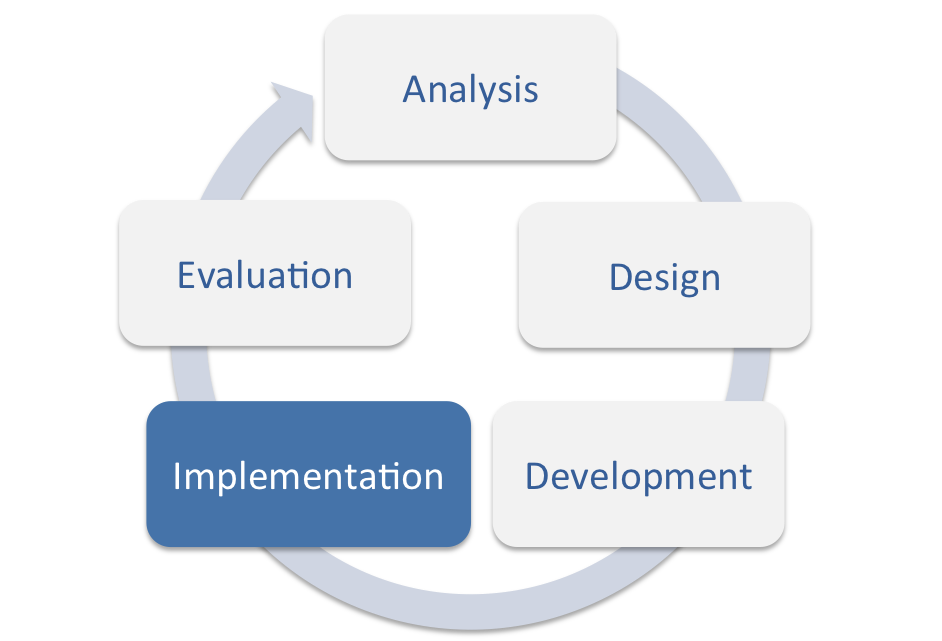
During the analysis phase, you should:
- Identify Strategic Priorities: What are the top 3-5 goals the organization is focused on for the next 12-18 months? Talk to department heads and executive leaders.
- Conduct a Gap Analysis: What skills, knowledge, and behaviors are needed to achieve these priorities? Where are the current gaps in the workforce?
- Define Success Metrics: How will you measure the impact of L&D on the business goals? These should be quantitative metrics, not just satisfaction surveys.
This upfront work ensures that every learning initiative that follows is purposeful and directly tied to a strategic need. It transforms L&D from a service provider into a vital component of the organization's strategic engine.
Time to test your understanding of how L&D aligns with business strategy.
What is the primary shift in mindset for a modern, strategic L&D professional?
In the context of the ADDIE model for strategic L&D, which phase is considered the most critical for ensuring alignment with business objectives?
By thinking like business leaders, L&D professionals can secure their seat at the strategic table and demonstrate undeniable value to the organization's growth and success.