Advanced Distributed System Design
Global Consistency Models
Beyond CAP: The PACELC Framework
The CAP theorem provides a stark choice during a network partition: consistency or availability. While foundational, it doesn't describe system behavior during normal operation, which is the vast majority of the time. This is where the offers a more complete model for distributed system design. It states that in case of a Partition (P), a system must choose between Availability (A) and Consistency (C). Else (E), when the system is running normally, it must trade between Latency (L) and Consistency (C).
PACELC forces us to consider two distinct scenarios: what happens during a partition, and what happens when everything is working correctly? This dual-focus is critical for building realistic, high-performance systems.
This E-L-C trade-off is where most architectural decisions are made. For a financial ledger or an inventory management system, sacrificing low latency for strong consistency (a PC/EC system) is non-negotiable. Every transaction must be synchronously replicated and verified, even if it adds milliseconds to the response time. Conversely, a social media timeline or a view counter will almost always prioritize low latency over immediate consistency (a PA/EL system). A user seeing a slightly stale "like" count is an acceptable price for a fast, responsive interface.
Models of Consistency
The "C" in PACELC isn't a single state but a spectrum. At one end is strong consistency, with being the gold standard. A linearizable system behaves as if there is only a single copy of the data, and all operations appear to take effect instantaneously at some point between their invocation and completion. This is the most intuitive model for programmers but the most expensive to implement in a distributed environment, often requiring consensus protocols like Paxos or Raft.
At the other end of the spectrum is eventual consistency. This model guarantees that if no new updates are made to a given data item, all replicas will eventually converge to the same value. The system offers no guarantees about the order of reads and writes in the interim. This relaxed approach is what allows for high availability and low latency, making it the default for many large-scale web applications.
Tuning with Quorums
Between these two extremes, quorum-based systems provide a tunable mechanism for balancing consistency, availability, and latency. A quorum is the minimum number of nodes that must participate in an operation for it to be considered successful. Let's define the variables:
- N: The total number of replicas for a piece of data.
- W: The write quorum, or the number of replicas that must acknowledge a write.
- R: The read quorum, or the number of replicas that must respond to a read request.
To achieve strong consistency, the quorums must intersect, ensuring that any read quorum overlaps with the most recent write quorum. This is guaranteed if the following condition is met:
By tuning these parameters, you can optimize for specific workloads:
-
Read-Heavy Workload (e.g., a product catalog): Set
W = NandR = 1. Writes are slow because they must wait for all replicas to confirm, but reads are extremely fast as they can return a value from any single replica. The strong consistency guarantee holds becauseN + 1 > N. -
Write-Heavy Workload (e.g., logging user actions): Set
W = 1andR = N. Writes are very fast, but reads are slow as they must query all replicas to find the latest version. This configuration prioritizes write availability and throughput.
Cross-Region Consistency
Maintaining consistency across geographically distributed regions introduces significant latency challenges. The speed of light becomes a non-trivial constraint. A round trip from the US East Coast to Europe can easily take over 100ms. Forcing synchronous replication for strong consistency across continents would make applications unusably slow for many use cases.
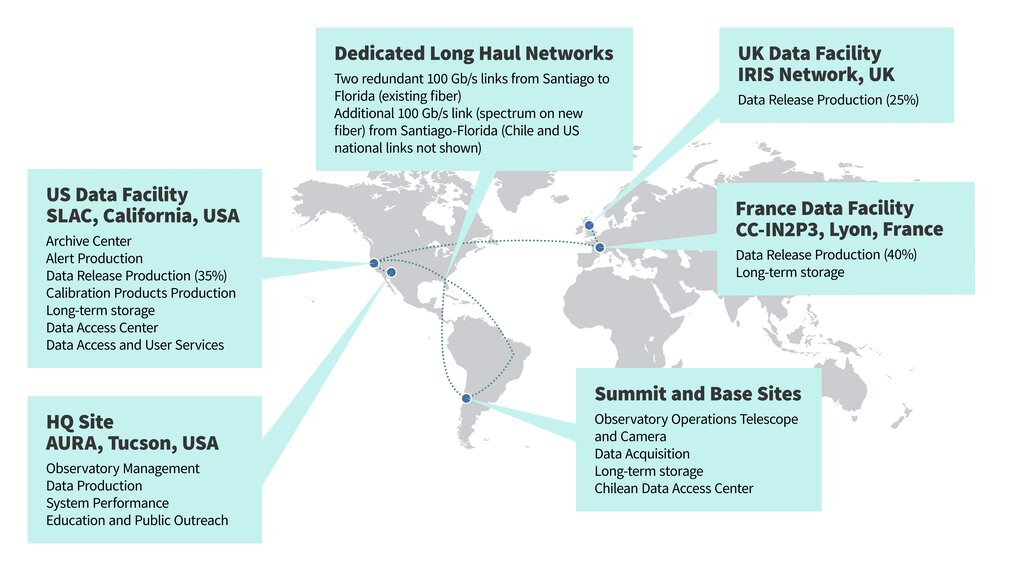
To mitigate this, many systems adopt a hybrid or 'local-first' consistency model. Writes are committed synchronously within a local region's quorum, providing low-latency strong consistency for users in that region. The data is then replicated asynchronously to other regions. This means a user in Asia might see a stale version of data just written by a user in North America, but the system remains fast for local operations. This is a deliberate, justifiable trade-off that balances global availability and local performance.
The PACELC theorem extends the CAP theorem by describing system behavior during normal operation. What trade-off does the "Else" (E) part of the theorem address?
For a social media timeline, which system design choice, according to PACELC, is most commonly preferred?