Advanced AI Image Prompting
Diffusion Architecture Mastery
From Words to Meaning
When you write a prompt, the AI doesn't see words. It sees numbers. The first crucial step in generating an image is translating your text into a meaningful numerical format called an embedding. This job belongs to a component called a text encoder.
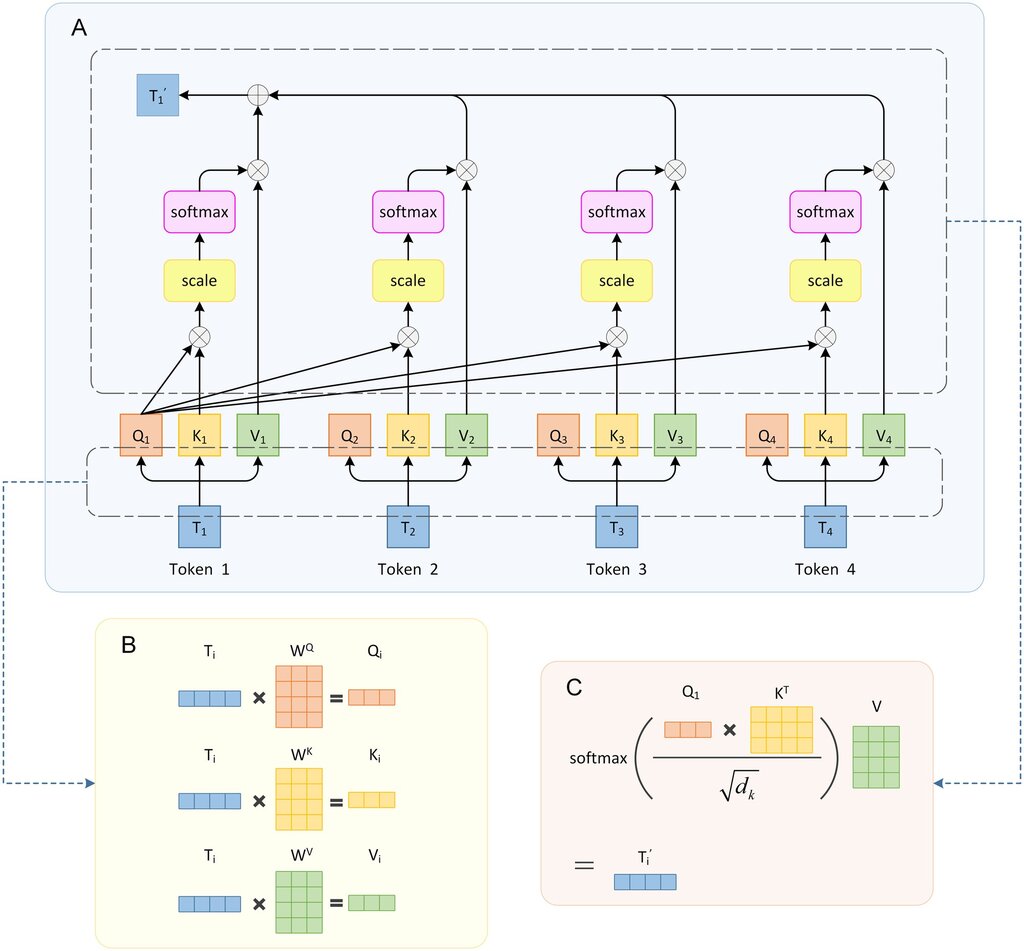
Think of an encoder as a sophisticated translator. It takes your prompt, breaks it down into tokens, and converts each one into a vector, a list of numbers that captures its meaning and relationship to other words. Different diffusion models use different encoders, which affects how they "understand" your instructions.
Many popular models, like older versions of Stable Diffusion and Midjourney, use an encoder called , which stands for Contrastive Language-Image Pre-Training. CLIP was trained on a massive dataset of images and their corresponding text captions. This allows it to learn rich associations between visual concepts and the words used to describe them. It knows what a "fluffy red cat" looks like because it has seen countless images labeled that way.
More recent models, like Google's Imagen and DALL-E 3, often use larger and more powerful text encoders like T5. These encoders are purely language-focused and tend to have a much better grasp of complex grammar, syntax, and long, descriptive prompts. The trade-off is that they are computationally more expensive. This difference is why a very conversational, detailed prompt might work better in DALL-E 3 than in an earlier version of Stable Diffusion.
Shaping the Chaos
Once your prompt is encoded into a set of vectors, the diffusion process begins. The model starts with a canvas of pure random noise in a compressed data space called the . Over a series of steps, it gradually removes the noise, shaping the randomness into a coherent image that matches the guidance from your text embedding. This is the denoising process.
But how strongly should the model stick to your prompt? This is controlled by a setting called Classifier-Free Guidance scale, or CFG. Think of it as a dial for artistic freedom.
| CFG Scale | Result |
|---|---|
| Low (1-6) | Creative and varied, but may ignore parts of the prompt. |
| Medium (7-12) | A good balance between following the prompt and image quality. |
| High (13-20+) | Very strictly follows the prompt, but can lead to overly saturated, 'burnt' artifacts. |
A high CFG value tells the model to follow your instructions to the letter. This can be useful for specific details, but cranking it too high can cause problems. The model can over-process the image, leading to deep-fried colors and harsh, unnatural-looking textures as it tries too hard to match every nuance of the prompt.
The Details That Matter
The structure of your prompt is just as important as the words themselves. Models read your prompt sequentially, and words at the beginning often have more influence. This is why "front-loading" your most important concepts is a common prompt engineering technique. An image of a "knight in shining armor, in a dark forest" will likely prioritize the knight over one of a "dark forest with a knight in shining armor."
In addition to order, many interfaces allow you to add weight to specific tokens, often using parentheses like
(word:1.3)to increase its importance or brackets[word]to decrease it.
You also need to be mindful of the token limit. Most encoders can only process a fixed number of tokens, typically 75 or so. Any text beyond this limit is often ignored. This is why breaking a very complex scene into multiple, simpler prompts or using features like inpainting can be more effective than writing a single, massive paragraph.
Understanding these architectural details—how text is encoded, how guidance steers creation, and how prompt structure influences the result—is key to moving beyond simple prompts. It allows you to diagnose problems, craft more precise instructions, and consistently generate the images you envision.
Ready to test your knowledge on how diffusion models work under the hood?
When you provide a text prompt to an AI image generator, the first step is to convert the words into a numerical format called an __________.
What is the primary function of a text encoder like CLIP in a diffusion model?