Ace Your Virtual Interview
Understanding Virtual Interviews
The New Handshake
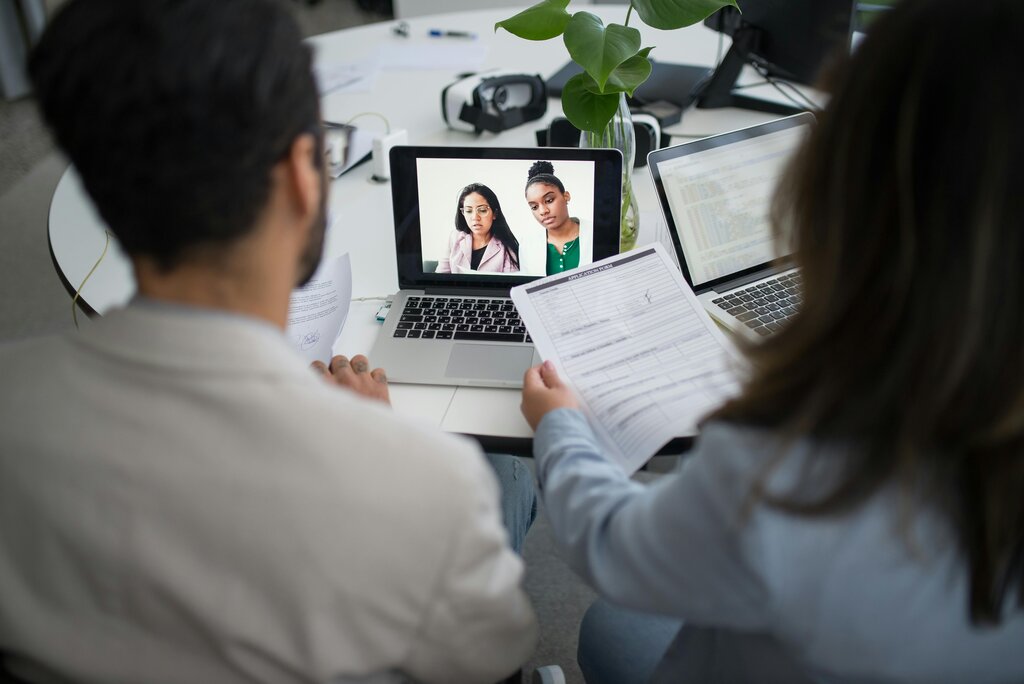
Not long ago, a job interview meant a firm handshake, a trip to an office, and an in-person conversation. While that still happens, another kind of interview has become just as common: the virtual interview. This is simply a job interview conducted remotely using technology like video conferencing.
Virtual interviews are likely to stay post-pandemic as well as it is convenient for employers, ease scheduling conflicts, and can broaden the candidate pool.
Instead of meeting across a desk, you meet across screens. This shift isn't just a temporary trend. Companies now use virtual interviews to screen and hire candidates from all over the world, making them a standard part of the modern job search.
Formats and Flow
Virtual interviews come in two main flavors. The most common is the live video interview. This is a real-time, face-to-face conversation with one or more interviewers, just like a traditional interview. It's typically held on platforms like Zoom, Google Meet, or Microsoft Teams. You'll talk, ask questions, and interact just as you would in person.
The second type is the one-way recorded interview. In this format, you don't speak with anyone live. Instead, the company sends you a set of questions, and you record your video responses within a specific time limit. Employers often use these to screen a large number of applicants early in the process. It can feel a bit like talking to yourself, but it's a chance to make a strong first impression on your own schedule.
| Feature | Live Video Interview | One-Way Recorded Interview |
|---|---|---|
| Interaction | Real-time conversation | No live interaction |
| Pacing | Spontaneous and conversational | Pre-set questions and timed responses |
| Purpose | Deeper discussion, culture fit | Initial screening, basic qualifications |
Pros and Cons
Virtual interviews offer clear benefits. For candidates, they save time and money on travel and offer more scheduling flexibility. You get to be in a familiar, comfortable environment—your own home.
For employers, they open the door to a global talent pool, are cheaper to conduct, and can significantly speed up the hiring timeline. It's easier to coordinate schedules when no one has to book a flight.
An advantage of virtual interviews is that you can have your notes and questions handy on your computer screen during your conversation.
However, there are challenges. It can be harder to build a personal connection and read body language through a screen. You can't get a feel for the office culture by walking through the building or meeting people informally. And, of course, there's always the risk of technical glitches like a weak internet connection or a frozen screen.
While the core goal is the same—to see if you're a good fit for the role—a virtual interview requires a different kind of preparation than its in-person counterpart.