A History of Financial Markets
Early Trade Systems
Before Money
Long before stocks, bonds, or even cash, people still needed to trade. The earliest and most straightforward system was bartering. If you were a farmer with a surplus of wheat and your neighbor was a potter with extra pots, you could simply swap. You get a new pot for your kitchen, and your neighbor gets wheat for bread. It was a direct exchange of goods for goods.
This worked well in small, close-knit communities. But it had a major flaw: what economists call the "double coincidence of wants." For a trade to happen, you had to find someone who not only had what you wanted but also wanted what you had. If the potter didn't need wheat, you were out of luck. You'd have to find a third person, maybe a weaver who wanted wheat and could trade you a blanket, which you could then try to trade to the potter for a pot. It could get complicated quickly.
Bartering requires both parties to want what the other has, at the exact same time. This makes trade inefficient and limits economic growth.
The First Money
To solve the problems of bartering, societies naturally gravitated toward commodity money. This is when a community agrees to use a specific, common item as a medium of exchange. The item had to be something that most people found useful or valuable on its own. It didn't matter if the potter needed your wheat anymore. As long as you could pay her in an accepted commodity, the trade could happen. She could then use that commodity to trade for whatever she actually needed.
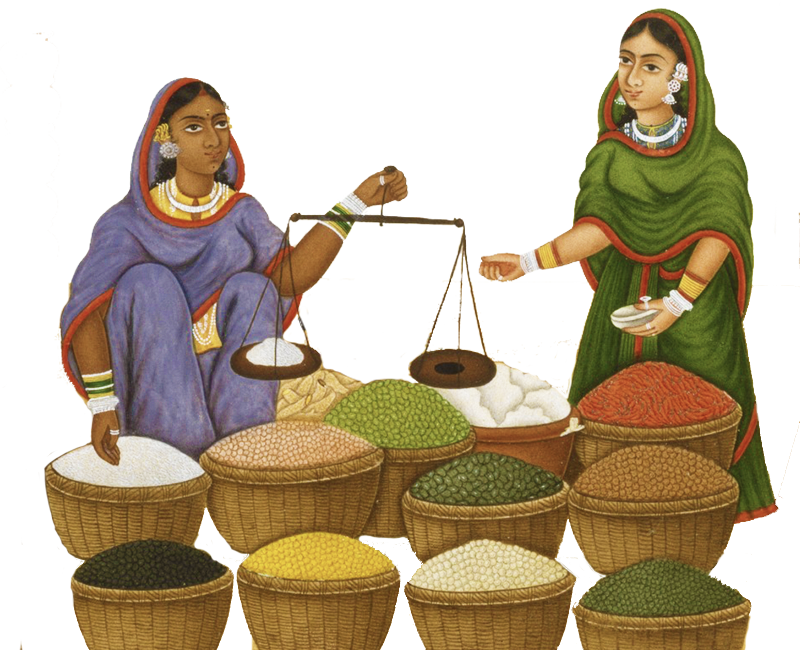
Early forms of commodity money were often things essential for survival or items of beauty. In various parts of the world, people used cattle, salt, grain, shells, and beads as currency. Roman soldiers were famously paid in salt, which is where the word "salary" comes from. The key was that the commodity had a recognized value, was relatively durable, and could be divided into smaller units for different-sized transactions.
The Dawn of Banking
As trade grew, so did wealth. People began to accumulate large amounts of valuable commodities, especially precious metals like gold and silver. But storing this wealth was a problem. It was heavy, bulky, and vulnerable to theft. This created a need for safe storage, giving rise to the earliest form of banking.
In ancient civilizations like Mesopotamia and Egypt, temples and palaces often served as the first banks. They were secure, well-guarded, and considered trustworthy. A farmer could deposit a large amount of grain in a temple granary for safekeeping. In return, the temple would give him a clay tablet or a piece of papyrus as a receipt, stating how much grain he had stored.
These receipts were a revolutionary invention. Instead of lugging around heavy bags of grain to make a purchase, the farmer could simply hand over the receipt. The person who received it could then go to the temple and claim the grain. Soon, people realized they didn't even need to claim the grain. They could just trade the receipts themselves, as if they were money. This was an early form of paper currency.
The keepers of these early banks, like priests or goldsmiths, noticed that most of the goods in storage just sat there. On any given day, only a small fraction of depositors would come to withdraw their assets. This observation led to the next big idea: lending. The bank could lend out a portion of the stored assets to others and charge interest, creating the foundation of the modern banking system.
From direct swaps to commodity-backed receipts, these early systems paved the way for the complex financial markets we know today. They solved fundamental problems of trust, storage, and exchange that were necessary for economies to grow.
What does the “double coincidence of wants” refer to in the context of bartering?
Which of the following was NOT a key characteristic of early commodity money?