
How the heart pumps blood
I would love to help you explore how the heart works! Before we dive into the chambers, valves, and electrical signals that keep everything moving, I want to make sure I tailor this session perfectly to what you need.
What brings you to learning about how the heart pumps blood today, and how detailed of an explanation are you looking for?
I am studying for a biology class and need a deep, step-by-step breakdown.
I'm excited to help you ace your biology class with a step-by-step masterclass on how this incredible pump works. To make studying effortless, let's break this big topic down into clear, logical steps.
Let's continue to the first step: Heart anatomy and chambers
The Heart's Home and Dimensions

I've display the learning path above to keep us oriented. Next, we can delve into the four chambers that make up this incredibly organized double-pump system.
Show me a diagram of where the heart is located
I would be happy to show you where the heart sits inside your chest cavity.
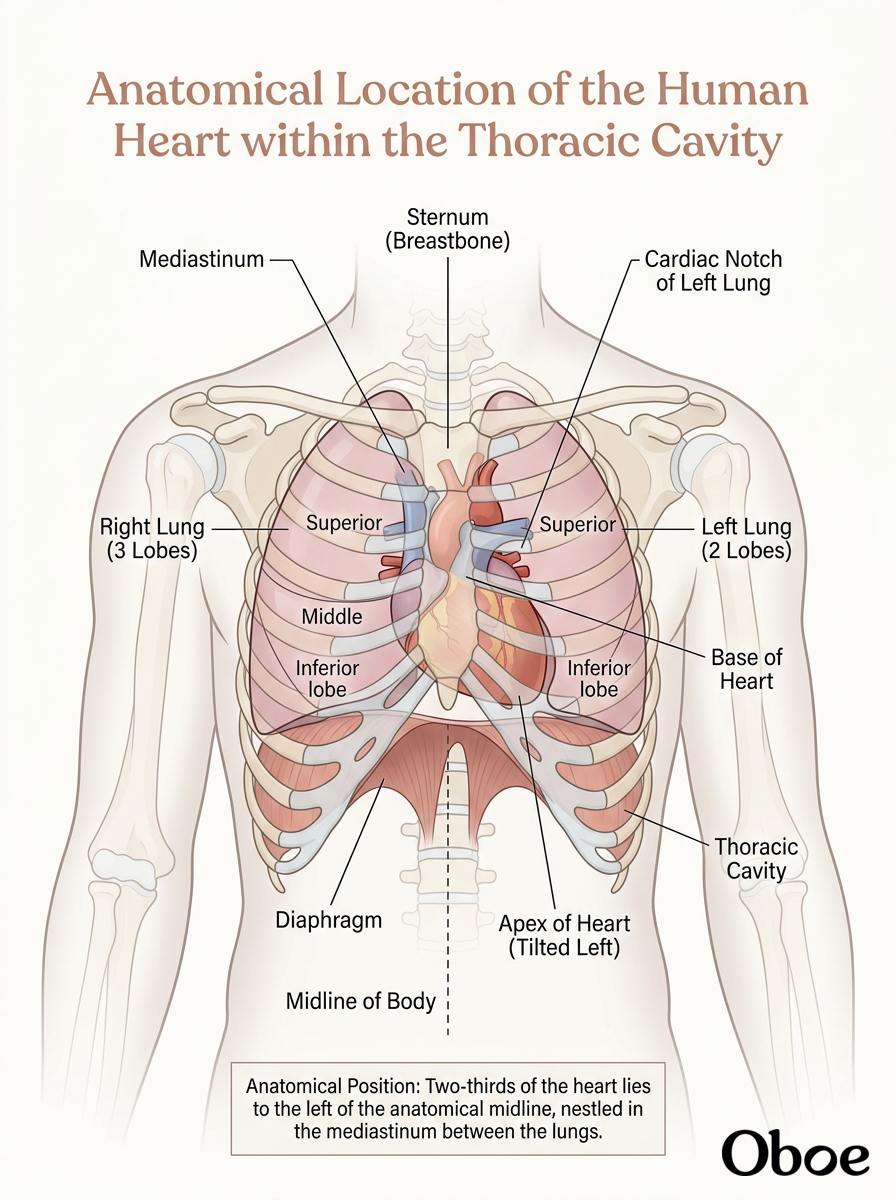
I've started generating a diagram showing exactly how the heart is cradled between your lungs. Let's move on to the core of our first topic: the four chambers that make up this incredible double-pump system.
The Four Chambers of the Heart
- The Atria (Upper Chambers): The right atrium and left atrium are thin-walled receiving pools. They collect blood returning to the heart from either the body or the lungs, holding it momentarily before it enters the main pumps below.
- The Ventricles (Lower Chambers): The right ventricle and left ventricle are thick, muscular powerhouses. They do the heavy lifting, actively squeezing to launch blood out of the heart and into your blood vessels.