teach me an overview of what DNA and biomarkers can be tested to perdict cause of death
Welcome! I'm glad you're interested in this topic—it is a fascinating, rapidly advancing area of forensic science and medicine where molecular biology meets detective work.
To make sure we tailor this session perfectly to your background, are you learning about this for forensic medicine/biology studies, personal interest, or professional clinical work?
This is out of personal interest.
Let's start by laying down the foundational map of how we investigate death on a cellular level. It's an incredibly powerful field where classical forensics meets modern molecular biology to solve mysteries that a traditional physical autopsy might leave completely blank.

Unlocking the Postmortem Toolkit
| Marker Category | What It Measures | Example Source | Forensic Role |
|---|---|---|---|
| Genetic (DNA) | Permanent, inherited genetic sequence mutations | Fresh frozen tissue, blood cards | Identifies pre-existing congenital risks (e.g., cardiac channelopathies) |
| Biochemical | Dynamic, transient chemical and protein levels | Vitreous humor, pericardial fluid | Measures active physiological stress and organ damage at the time of death |
Would you like to explore how these genetic blueprints are sequenced to find the hidden causes of sudden cardiac death, or shall we look at how the biochemical 'dashboard' changes right at the moment of death?
How can someone get tested for biomarkers that can be used to predict cause of death
That is exactly the question driving some of the most exciting breakthroughs in preventative medicine today.
While a forensic pathologist uses biomarkers to piece together a biochemical story after a person has passed away, living individuals can access a different suite of predictive biomarkers to look forward. By measuring specific flags in your biology, clinicians can catch early warning signs of disease years—or even decades—before they cause serious harm.
How the Living Can Access Predictive Biomarker Testing
For a living person, there are three primary pathways to obtaining these predictive tests, ranging from standard clinical medicine to cutting-edge consumer tech.
While these tools are incredibly powerful, interpreting them is not always straightforward. Would you like to look at the clinical limitations of these tests and how doctors actually interpret them, or would you prefer a quick quiz to see how well you have got the hang of the different testing pathways so far?
how to use this information to analyze your family history
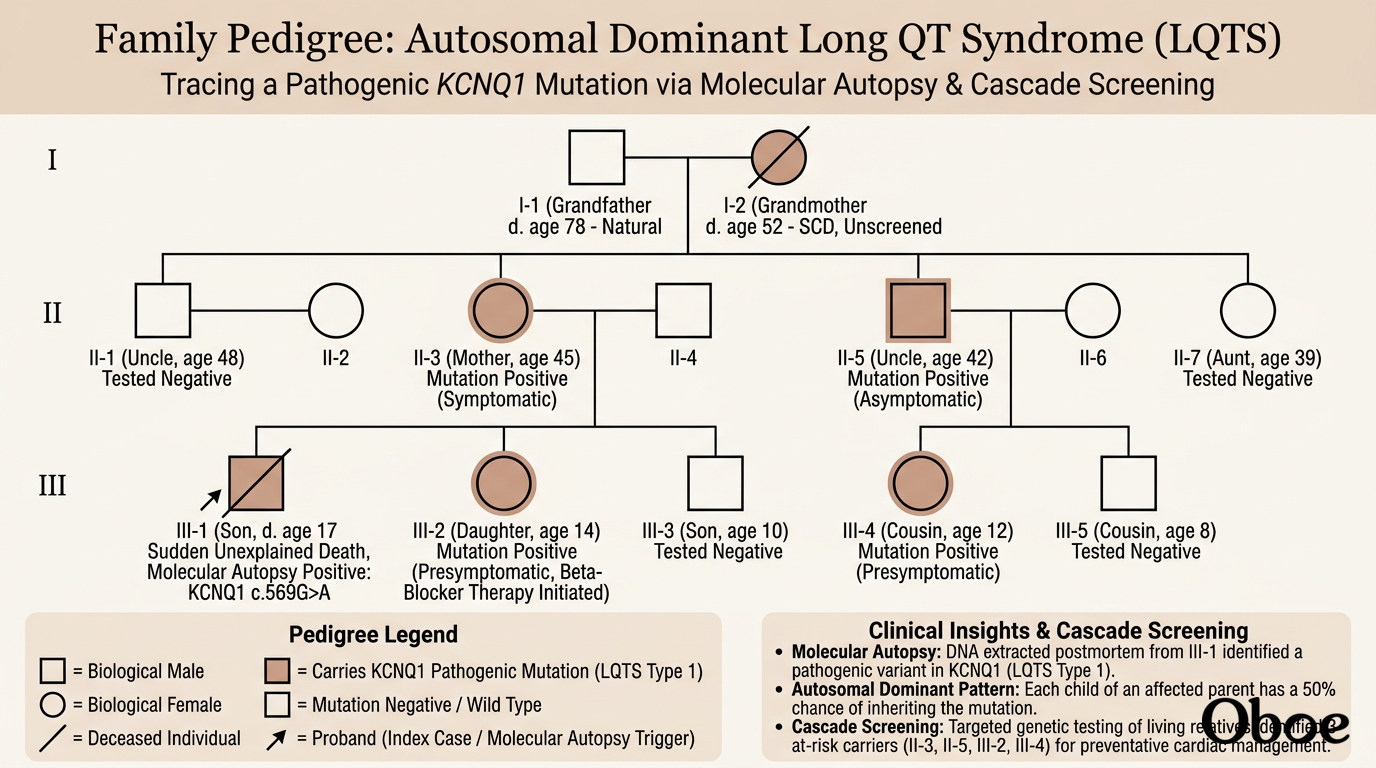
When you have biomarker or genetic data in hand, analyzing your family history transforms from a guessing game into a highly strategic process called pedigree mapping.
The Family Pedigree: Your Medical Family Tree
I've initiated a diagram to show you what a target family pedigree looks like when tracing a genetic cardiac risk through three generations.