No history yet

Data Science

Welcome! I'm so excited to dive into the world of Data Science with you. Before we chart our path and start exploring, I'd love to learn a little bit about what brings you here so I can tailor everything perfectly to your style and goals.

Could you tell me a bit about your background? For example, do you have any prior experience with programming, statistics, or math, and is there a specific project or career goal motivating you to learn about Data Science?

I'm a complete beginner with no math or programming background.

Starting from scratch is actually a fantastic way to begin because you won't have to unlearn any bad habits, and we can focus entirely on the core logic first. Let's take a look at the game plan we'll follow to build your confidence and understanding step-by-step.

Your path
The Data Science Toolkit (Conceptual)
Data in the Real World
Storytelling with Data
Next Steps: Building Your Skills
Let's dive straight into our very first step: defining what data science actually is without any of the scary jargon. At its heart, is simply using data to answer questions and solve real-world problems. Think of it as playing detective. Instead of relying on gut feelings, a data detective gathers clues (data), cleans them up to see them clearly, looks for hidden patterns, and then uses those patterns to make smart decisions or predictions.

Continue: How is data science used in everyday life?

It is actually hard to spend an hour online without interacting with data science in action. Some of the most common, everyday experiences are powered entirely behind the scenes by clever algorithms processing data in real time.

Data Science in Your Daily Routine

Think about what happens when you open Netflix, YouTube, or Spotify. You are met with a highly personalized homepage of recommendations. Those platforms are constantly tracking what you watch, what you skip, and what you search for. They take your behavior, group it with millions of other users who have similar tastes, and use to guess exactly what song or show will keep you hooked next. That is data science acting as your personal digital butler.

A three-part system diagram showing movie watching, music skipping, and text searching actions feeding into a central processor which generates a personalized timeline feed on a mobile device.

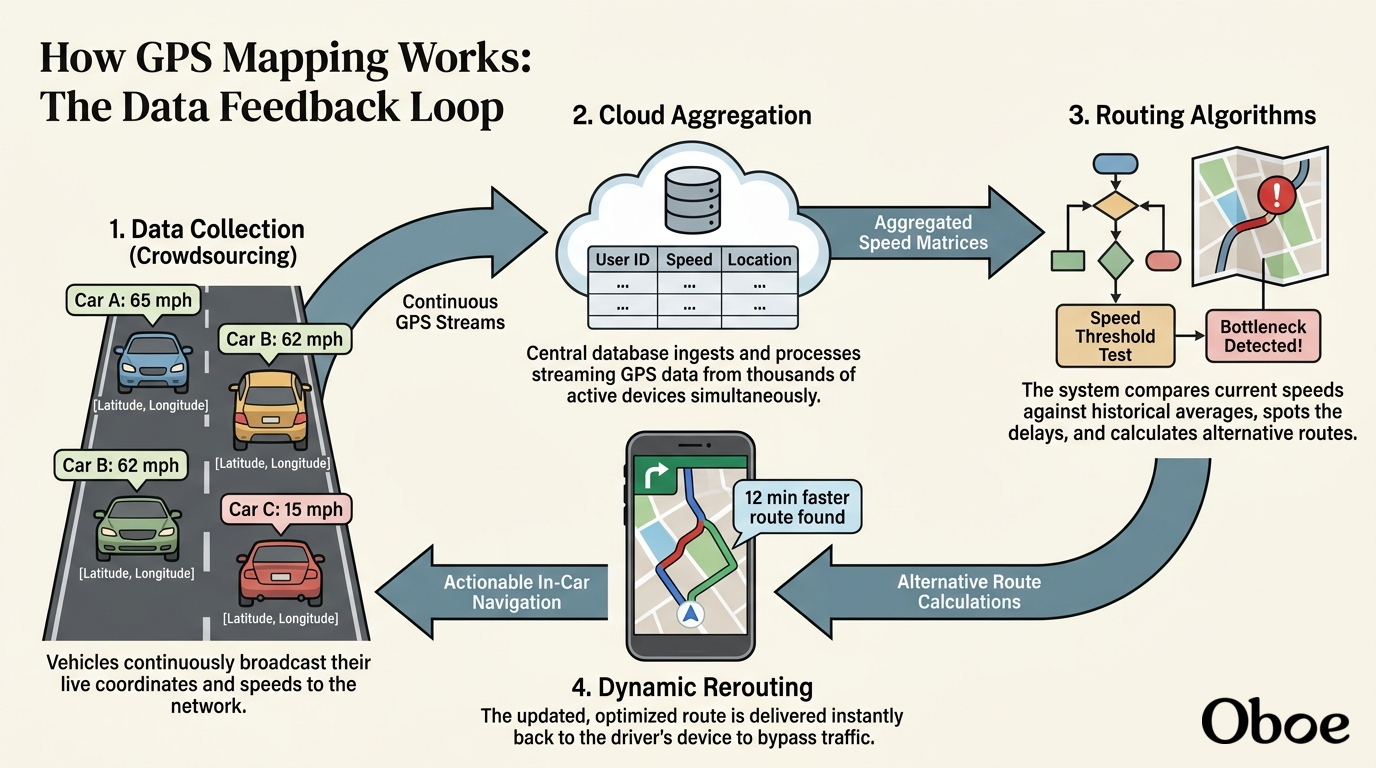
Another massive everyday example is navigation. When you use Google Maps or Apple Maps to find the fastest route home, the app is instantly analyzing real-time GPS coordinates from thousands of other drivers on those same roads. By measuring how fast those devices are moving, the data model detects a traffic jam before you can even see the brake lights, rerouting you instantly.

Show me a diagram of how GPS mapping works

I'd be happy to show you how that works! It is actually a brilliant demonstration of how raw data is constantly transformed into live, actionable guidance.

DIAG
Diagram
Generated course diagram
I've started generating that diagram for you. As you will see, the entire process is a team effort where everyday devices work together, which leads us right into our next big concept: demystifying who actually does this work. Many people think you need to be a math genius or a solo coding wizard to work in this field, but that is a major myth. In the real world, data science is a highly collaborative .