
How to me more emotionally available
It's wonderful that you're taking this step. Developing emotional availability is a deeply rewarding journey that starts with understanding yourself so you can build stronger, more authentic connections with others.
Before we dive into the concepts and practical tools, I'd love to learn a little bit about what's bringing you here today. What inspired you to explore becoming more emotionally available right now—is there a specific relationship or situation you have in mind?
Yes, I'm trying to improve a romantic relationship
Wanting to strengthen your romantic relationship is a powerful motivator. It shows how much you care about building a lasting connection with your partner.
Before we begin exploring how emotional availability works, I'd love to understand your situation a bit better. When emotional moments, vulnerable conversations, or disagreements happen, how do things usually play out between you two?
I get defensive or try to fix the problem right away
Getting defensive or jumping straight into 'fixing' mode are incredibly common reactions. When we feel the heat of a conflict or the weight of a partner's difficult emotions, our brains often register it as a threat. Defensive walls and quick fixes are just ways we try to protect ourselves and restore order when we feel overwhelmed.
What is Emotional Availability

Let's continue to the common signs and root causes of unavailability.
Let's explore what is actually happening beneath the surface when we pull back from intimacy.
The Armor We Wear
- Fear of Rejection: The belief that if you let your partner see your true, messy, unfiltered self, they will eventually leave or realize you are not enough.
- Fear of Engulfment: The worry that if you fully open up and let someone in, you will lose your independence, your voice, or get completely swallowed up by their needs.
I've started creating a diagram to map out how these fears trigger your automatic defense mechanisms, such as jumping straight into fixing things or building up a defensive wall.
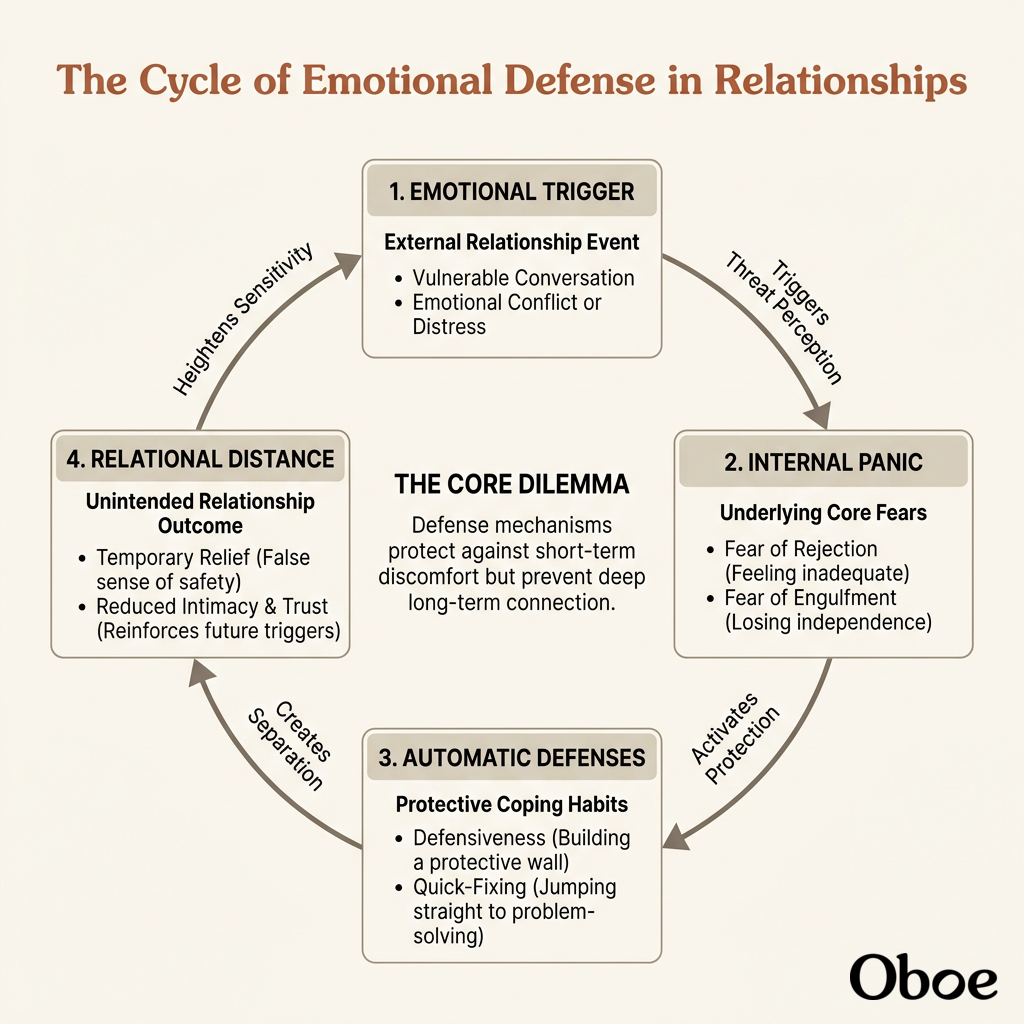
Seeing this cycle visualised can help you spot the exact moment your protective armor starts to slide into place during a conversation with your partner. When you notice that transition happening, you can pause before the shield goes up.